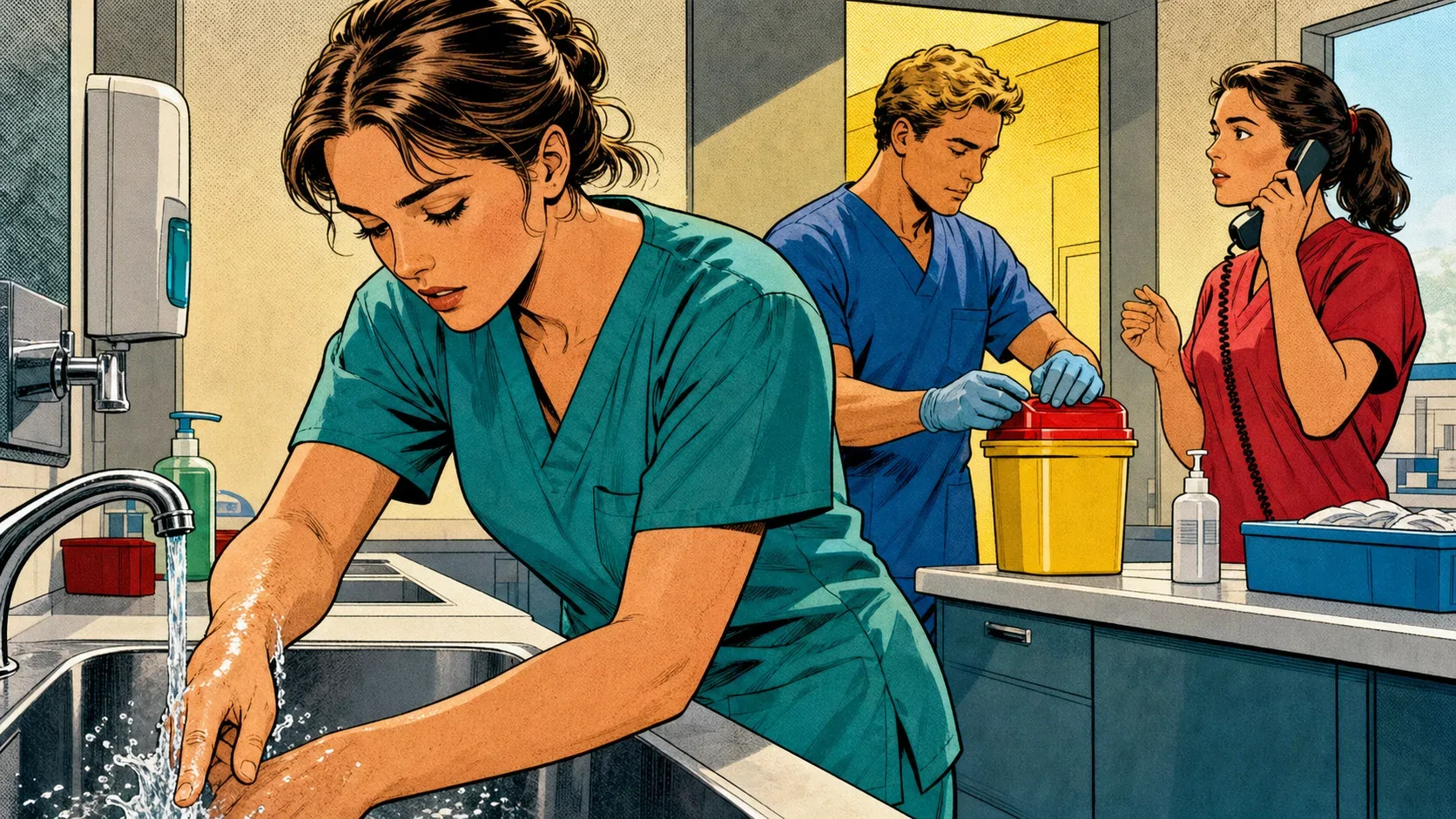

NSI means needlestick injury, a puncture from a needle or sharp that may need urgent washing, reporting and medical advice.
Source check: 8 August 2026 · How this page is checked · Report a correction
Quick answer
NSI: N means Needlestick; S means Sharp; I means Injury. NSI means needlestick injury, a puncture from a needle or sharp that may need urgent washing, reporting and medical advice.
When NSI helps
Use NSI when a first aider, worker, student or community member is stuck or cut by a needle or sharp. Wash the area with soap and running water, follow local reporting procedures and seek medical advice without delay about BBV risk, vaccination, testing and possible PEP.
Safety boundary: Documentation and policy do not replace immediate first aid, urgent medical advice or emergency response. If a real incident is unfolding, act on the person’s condition, call Triple Zero (000) when it is an emergency and follow the operator’s instructions.
Where it sits: NSI is commonly read alongside BBV, PPE, IPC, PEP, but each term has a different job. The comparisons later on this page explain those boundaries.
Framework status: NSI describes the injury, not its infection risk. Wash promptly and obtain time-sensitive clinical assessment for HIV, hepatitis B, hepatitis C and other exposure factors rather than estimating risk from the needle alone.

What Does NSI Stand For?
| N | Needlestick A needle or sharp object has pierced the skin. |
| S | Sharp Sharps include needles, lancets, syringes, scalpels or contaminated broken glass. |
| I | Injury A puncture, cut or scratch that may expose the person to blood or body fluids. |
Common Mistakes
- Do not squeeze or aggressively scrub the wound.
- Do not put the sharp loose in normal rubbish.
- Do not decide the exposure is harmless without appropriate health advice.
A Real-World NSI Scenario
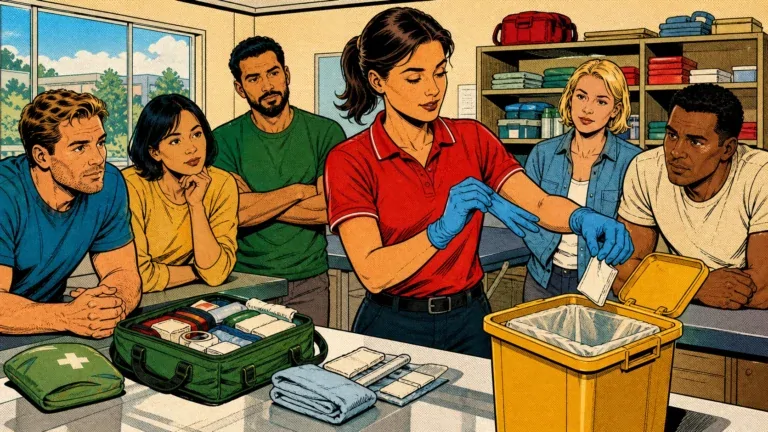
The scene: A worker sustains a sharps injury and must wash the site, report it and seek timely medical advice.
In this NSI scene, begin with N for Needlestick: A needle or sharp object has pierced the skin. That opening prompt matters here because Use NSI when a first aider, worker, student or community member is stuck or cut by a needle or sharp. Wash the area with soap and running water, follow local reporting procedures and seek medical advice without delay about BBV risk, vaccination, testing and possible PEP. Keep the observation tied to needlestick injury first aid, sharps exposure, workplace incident reporting and blood-borne virus risk; in practice, watch the hazard, who was exposed, broken skin or mucous-membrane contact, controls already used and continuing risk rather than reciting the letters without checking the person or setting.
For NSI, I closes the pattern as Injury. A puncture, cut or scratch that may expose the person to blood or body fluids. Before the sequence is treated as complete, relate it to the exact exposure, time, first aid, PPE used, people affected and who is arranging medical or workplace follow-up. A specific trap to avoid is: Do not decide the exposure is harmless without appropriate health advice.
Where the scenario could change: Do not squeeze or aggressively scrub the wound. Documentation and policy do not replace immediate first aid, urgent medical advice or emergency response. If the facts no longer fit a stable NSI example, stop rehearsing the acronym and move to the safer emergency, clinical or workplace pathway.
Letter-By-Letter Practical Notes
The short table above is designed for scanning. These notes are for readers who want to understand how each component affects a real decision about needlestick injury first aid, sharps exposure, workplace incident reporting and blood-borne virus risk.
- N — Needlestick: As the opening prompt, this means: A needle or sharp object has pierced the skin. In a NSI situation, the useful check is whether that instruction changes what you observe, what you do next or what you need to report.
- S — Sharp: As the step 2 of the sequence, this means: Sharps include needles, lancets, syringes, scalpels or contaminated broken glass. In a NSI situation, the useful check is whether that instruction changes what you observe, what you do next or what you need to report.
- I — Injury: As the closing prompt, this means: A puncture, cut or scratch that may expose the person to blood or body fluids. In a NSI situation, the useful check is whether that instruction changes what you observe, what you do next or what you need to report.
NSI and similar terms
An injury from a needle or another sharp object. The term describes what happened, rather than a set of treatment steps.
Here is how the related terms differ:
- BBV: Viruses that can be carried in blood. The term explains an exposure risk; it does not mean every blood contact causes an infection.
- PPE: Personal protective equipment, such as gloves and eye protection. It helps protect the helper; it does not replace other safety steps.
- IPC: The everyday steps that help stop infections spreading, such as cleaning hands and using protective equipment.
- PEP: Medicine a clinician may prescribe after a possible HIV exposure. It needs urgent medical assessment; it is not a first-aid treatment you give yourself.
Frequently asked questions
What does NSI stand for?
N means Needlestick; S means Sharp; I means Injury. NSI means needlestick injury, a puncture from a needle or sharp that may need urgent washing, reporting and medical advice.
When is NSI useful?
Use NSI when a first aider, worker, student or community member is stuck or cut by a needle or sharp. Wash the area with soap and running water, follow local reporting procedures and seek medical advice without delay about BBV risk, vaccination, testing and possible PEP.
How is NSI different from BBV?
NSI is framed here around needlestick injury first aid, sharps exposure, workplace incident reporting and blood-borne virus risk. BBV is framed around blood exposure first aid, workplace infection control, sharps injuries, PPE and body-fluid cleanup. They may appear in the same course or incident, but they answer different questions and should not be treated as interchangeable.
When should I call Triple Zero (000)?
Call Triple Zero (000) when the person is seriously ill or injured, is deteriorating, or the urgent warning signs described on this page are present. Documentation and policy do not replace immediate first aid, urgent medical advice or emergency response.
What should I notice first when using NSI?
Start with N for Needlestick: A needle or sharp object has pierced the skin. Keep the whole situation in view and escalate early if the person looks seriously ill or injured.
What is a common mistake with NSI?
Do not squeeze or aggressively scrub the wound. The acronym should make the next decision safer, not create a reason to delay help.
How can I practise NSI without pretending it is a diagnosis?
Use a short scenario, say what you can actually see or hear, and explain the next safe action in plain language. Then practise this category-specific task: walk through the equipment, reporting path and after-hours escalation route before an incident occurs.
Related Acronyms
- healthdirect needlestick injuries
- Australian PEP immediate management
- Australian PEP occupational exposure guidance
- Australian Immunisation Handbook hepatitis B
- healthdirect blood-borne viruses
- Safe Work Australia biological hazards
This guide is educational and does not replace accredited first aid training, professional medical advice, or directions from emergency services.