
PEP means post-exposure prophylaxis, medicine that may reduce HIV risk after a possible exposure if started quickly after medical assessment.
Source check: 8 August 2026 · How this page is checked · Report a correction
Quick answer
PEP: P means Post; E means Exposure; P means Prophylaxis. PEP means post-exposure prophylaxis, medicine that may reduce HIV risk after a possible exposure if started quickly after medical assessment.
When PEP helps
Use PEP when discussing urgent medical follow-up after possible HIV exposure, including some needlestick, blood or body-fluid incidents. PEP is time-sensitive and must be assessed by a clinician; first aiders should wash, report and seek medical advice quickly rather than deciding from the acronym alone.
Safety boundary: Documentation and policy do not replace immediate first aid, urgent medical advice or emergency response. If a real incident is unfolding, act on the person’s condition, call Triple Zero (000) when it is an emergency and follow the operator’s instructions.
Where it sits: PEP is commonly read alongside NSI, BBV, IPC, PPE, but each term has a different job. The comparisons later on this page explain those boundaries.
Framework status: This page uses PEP for HIV post-exposure prophylaxis under the 2025 Australian National Guidelines. It does not cover every blood-borne virus and only a clinician can determine whether treatment is indicated.

What Does PEP Stand For?
| P | Post After a possible exposure has happened. |
| E | Exposure A situation where HIV exposure may have occurred through blood or certain body fluids. |
| P | Prophylaxis Preventive treatment prescribed after medical assessment. |
Common Mistakes
- Do not wait days before asking for advice about possible HIV exposure.
- Do not assume PEP is needed or not needed without medical assessment.
- Do not confuse PEP with PrEP, which is taken before possible exposure.
PEP Step-By-Step For Beginners
Use this detailed sequence when learning how PEP applies to post exposure prophylaxis, needlestick injury follow-up, HIV exposure risk and urgent medical advice. It connects the letters to observable checks, clear words and a useful handover rather than treating the acronym as a bare list.
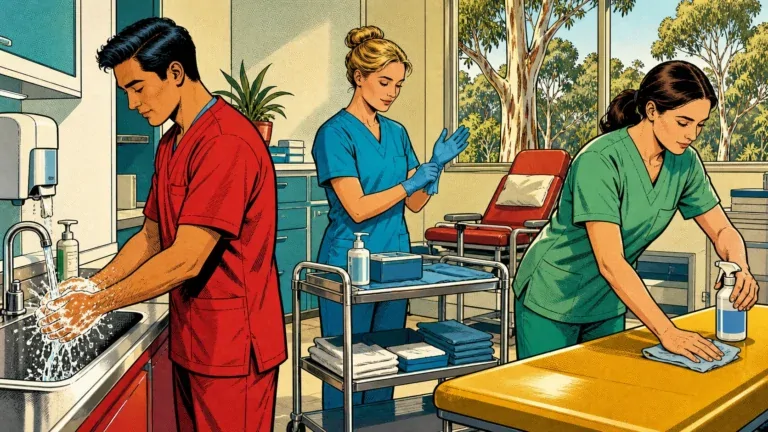
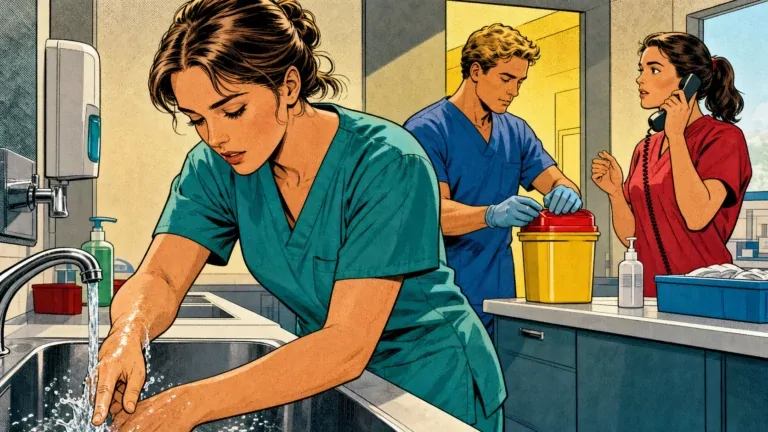
- Do immediate first aid. If there is a needlestick or body-fluid exposure, wash the area with soap and running water. Do not squeeze or scrub aggressively.
- Report and document. Follow workplace/school reporting steps. Record what happened, when, and what substance/fluid was involved.
- Seek urgent medical advice. PEP is time-sensitive and must be assessed by a clinician. Seek medical advice quickly rather than waiting to see what happens.
- Use trusted Australian guidance. Follow the advice of clinicians and the linked Australian sources. Do not self-prescribe or self-diagnose from an acronym.
A Real-World PEP Scenario
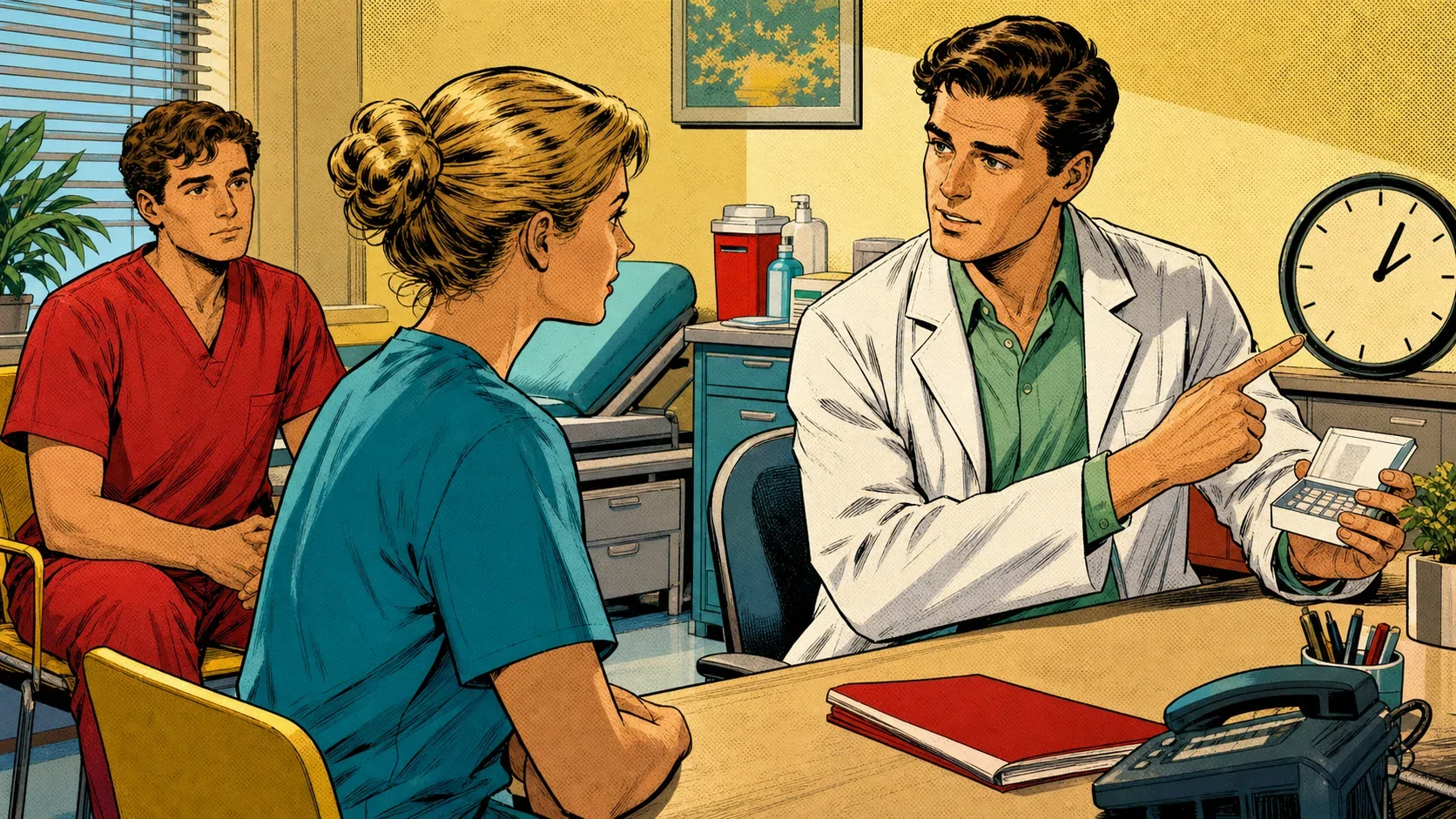
The scene: After a possible HIV exposure, a clinician discusses whether time-sensitive preventive medicine is indicated.
In this PEP scene, begin with P for Post: After a possible exposure has happened. That opening prompt matters here because Use PEP when discussing urgent medical follow-up after possible HIV exposure, including some needlestick, blood or body-fluid incidents. PEP is time-sensitive and must be assessed by a clinician; first aiders should wash, report and seek medical advice quickly rather than deciding from the acronym alone. Keep the observation tied to post exposure prophylaxis, needlestick injury follow-up, HIV exposure risk and urgent medical advice; in practice, watch the hazard, who was exposed, broken skin or mucous-membrane contact, controls already used and continuing risk rather than reciting the letters without checking the person or setting.
For PEP, P closes the pattern as Prophylaxis. Preventive treatment prescribed after medical assessment. Before the sequence is treated as complete, relate it to the exact exposure, time, first aid, PPE used, people affected and who is arranging medical or workplace follow-up. A specific trap to avoid is: Do not confuse PEP with PrEP, which is taken before possible exposure.
Where the scenario could change: Do not wait days before asking for advice about possible HIV exposure. Documentation and policy do not replace immediate first aid, urgent medical advice or emergency response. If the facts no longer fit a stable PEP example, stop rehearsing the acronym and move to the safer emergency, clinical or workplace pathway.
PEP and similar terms
Medicine a clinician may prescribe after a possible HIV exposure. It needs urgent medical assessment; it is not a first-aid treatment you give yourself.
Here is how the related terms differ:
- NSI: An injury from a needle or another sharp object. The term describes what happened, rather than a set of treatment steps.
- BBV: Viruses that can be carried in blood. The term explains an exposure risk; it does not mean every blood contact causes an infection.
- IPC: The everyday steps that help stop infections spreading, such as cleaning hands and using protective equipment.
- PPE: Personal protective equipment, such as gloves and eye protection. It helps protect the helper; it does not replace other safety steps.
Frequently asked questions
What does PEP stand for?
P means Post; E means Exposure; P means Prophylaxis. PEP means post-exposure prophylaxis, medicine that may reduce HIV risk after a possible exposure if started quickly after medical assessment.
When is PEP useful?
Use PEP when discussing urgent medical follow-up after possible HIV exposure, including some needlestick, blood or body-fluid incidents. PEP is time-sensitive and must be assessed by a clinician; first aiders should wash, report and seek medical advice quickly rather than deciding from the acronym alone.
Is PEP the same as PrEP?
No. PEP is after a possible exposure; PrEP is taken before possible exposure.
Do all needlesticks need PEP?
Not always. That decision requires clinical assessment of the exposure. The urgent step is to wash, report, and get medical advice quickly.
Should I test or treat myself?
No. Follow medical advice and workplace procedures. This page is educational only and does not replace accredited first aid training or medical care.
How is PEP different from NSI?
PEP is framed here around post exposure prophylaxis, needlestick injury follow-up, HIV exposure risk and urgent medical advice. NSI is framed around needlestick injury first aid, sharps exposure, workplace incident reporting and blood-borne virus risk. They may appear in the same course or incident, but they answer different questions and should not be treated as interchangeable.
When should I call Triple Zero (000)?
Call Triple Zero (000) when the person is seriously ill or injured, is deteriorating, or the urgent warning signs described on this page are present. Documentation and policy do not replace immediate first aid, urgent medical advice or emergency response.
Related Acronyms
- Australian National PEP Guidelines 2025
- Australian PEP immediate management
- Australian PEP occupational exposure guidance
- healthdirect PEP
- healthdirect needlestick injuries
This guide is educational and does not replace accredited first aid training, professional medical advice, or directions from emergency services.