
LVR means Low Voltage Rescue, a workplace electrical safety skill often paired with CPR training.
Source check: 8 August 2026 · How this page is checked · Report a correction
Quick answer
LVR: L means Low Voltage; V means Voltage; R means Rescue. LVR means Low Voltage Rescue, a workplace electrical safety skill often paired with CPR training.
When LVR helps
Use LVR when discussing electrical workplace rescue training and rescue-from-live-panel scenarios. The priority is always rescuer safety: isolate power where possible, avoid becoming a second casualty, call 000 and begin DRSABCD when safe.
Safety boundary: Documentation and policy do not replace immediate first aid, urgent medical advice or emergency response. If a real incident is unfolding, act on the person’s condition, call Triple Zero (000) when it is an emergency and follow the operator’s instructions.
Where it sits: LVR is commonly read alongside WHS, BBV, IPC, NSI, but each term has a different job. The comparisons later on this page explain those boundaries.
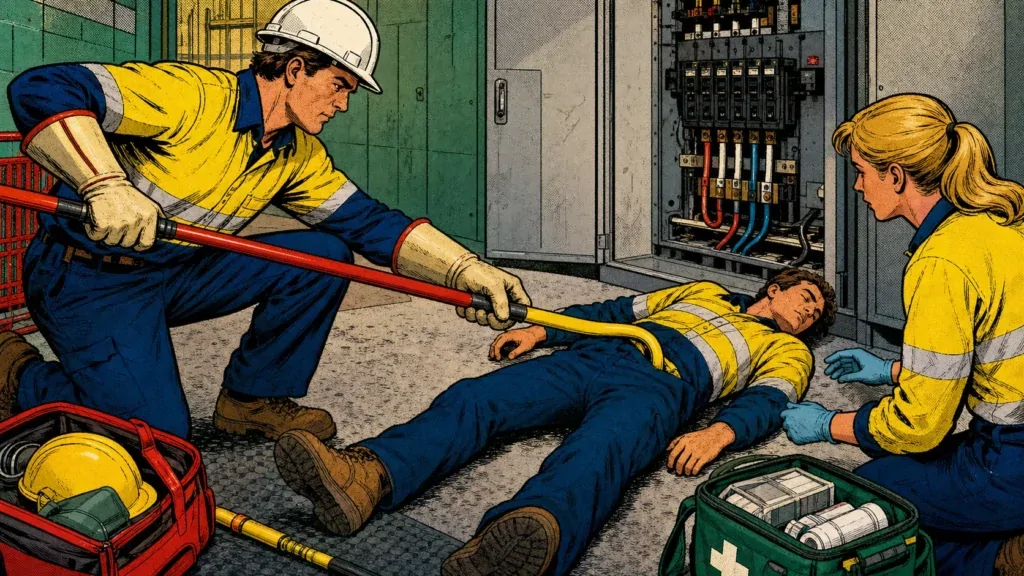
What Does LVR Stand For?
| L | Low Voltage Electrical equipment in the low-voltage range, still dangerous and potentially fatal. |
| V | Voltage Electrical potential that can drive current through the body. |
| R | Rescue Safely separating a person from danger and starting appropriate first aid. |
Common Mistakes
- Do not touch someone who may still be in contact with live electricity.
- Do not attempt electrical work or rescue beyond your training and workplace procedure.
- Do not forget that an electrical incident can become a CPR and AED incident.
A Real-World LVR Scenario
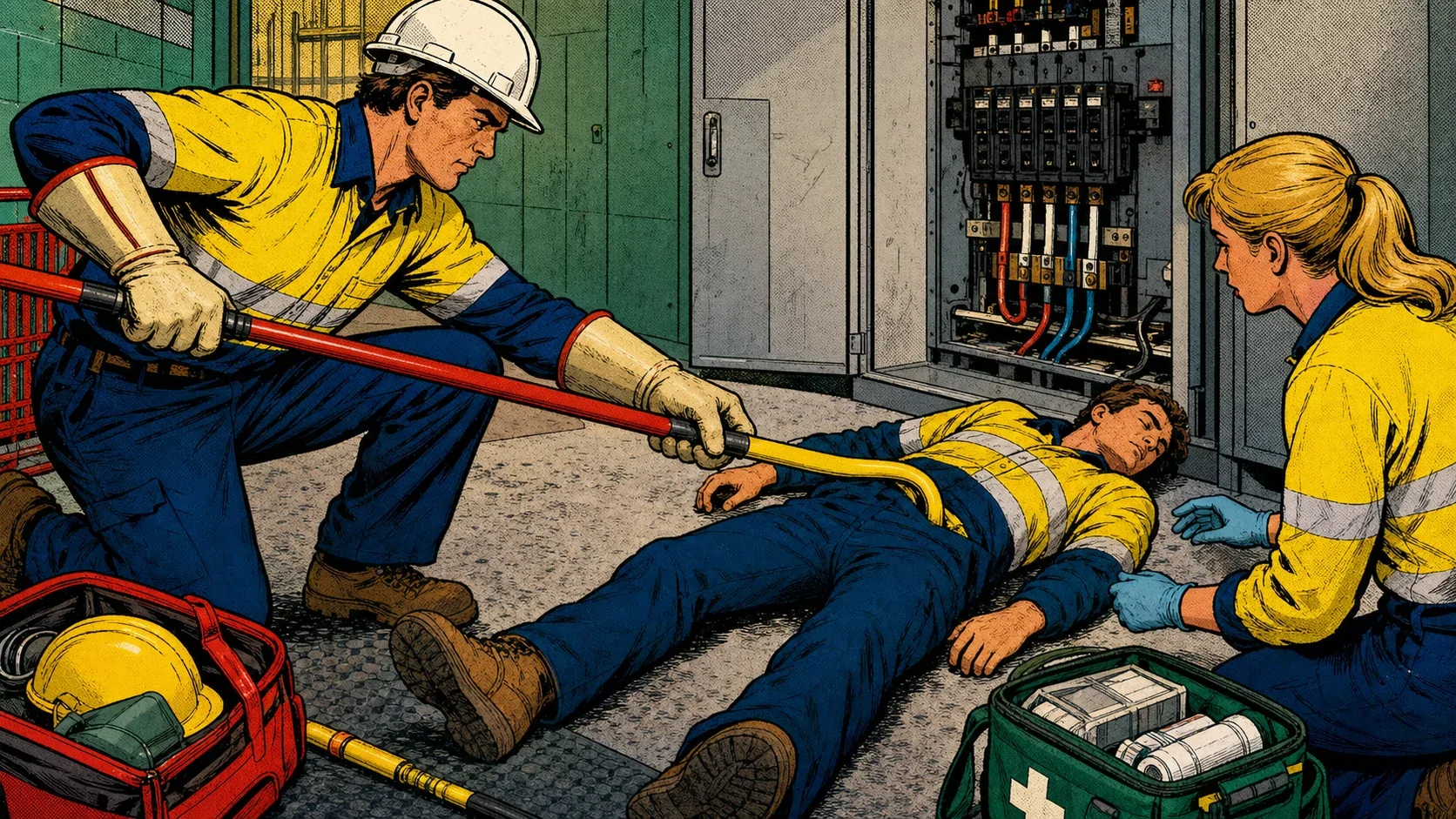
The scene: An electrical worker becomes unresponsive near energised equipment and the rescue plan must control the electrical risk first.
In this LVR scene, begin with L for Low Voltage: Electrical equipment in the low-voltage range, still dangerous and potentially fatal. That opening prompt matters here because Use LVR when discussing electrical workplace rescue training and rescue-from-live-panel scenarios. The priority is always rescuer safety: isolate power where possible, avoid becoming a second casualty, call 000 and begin DRSABCD when safe. Keep the observation tied to electrical work, live low voltage panels, rescue planning and CPR readiness; in practice, watch the hazard, who was exposed, broken skin or mucous-membrane contact, controls already used and continuing risk rather than reciting the letters without checking the person or setting.
For LVR, R closes the pattern as Rescue. Safely separating a person from danger and starting appropriate first aid. Before the sequence is treated as complete, relate it to the exact exposure, time, first aid, PPE used, people affected and who is arranging medical or workplace follow-up. A specific trap to avoid is: Do not forget that an electrical incident can become a CPR and AED incident.
Where the scenario could change: Do not touch someone who may still be in contact with live electricity. Documentation and policy do not replace immediate first aid, urgent medical advice or emergency response. If the facts no longer fit a stable LVR example, stop rehearsing the acronym and move to the safer emergency, clinical or workplace pathway.
Letter-By-Letter Practical Notes
The short table above is designed for scanning. These notes are for readers who want to understand how each component affects a real decision about electrical work, live low voltage panels, rescue planning and CPR readiness.
- L — Low Voltage: As the opening prompt, this means: Electrical equipment in the low-voltage range, still dangerous and potentially fatal. In a LVR situation, the useful check is whether that instruction changes what you observe, what you do next or what you need to report.
- V — Voltage: As the step 2 of the sequence, this means: Electrical potential that can drive current through the body. In a LVR situation, the useful check is whether that instruction changes what you observe, what you do next or what you need to report.
- R — Rescue: As the closing prompt, this means: Safely separating a person from danger and starting appropriate first aid. In a LVR situation, the useful check is whether that instruction changes what you observe, what you do next or what you need to report.
LVR and similar terms
Low-voltage rescue: specialist training for electrical incidents. Electrical danger must be controlled before a rescue; ordinary first-aid training alone does not qualify someone for live electrical rescue.
Here is how the related terms differ:
- WHS: Work health and safety: the wider work of managing workplace risks. First-aid planning is one part of it.
- BBV: Viruses that can be carried in blood. The term explains an exposure risk; it does not mean every blood contact causes an infection.
- IPC: The everyday steps that help stop infections spreading, such as cleaning hands and using protective equipment.
- NSI: An injury from a needle or another sharp object. The term describes what happened, rather than a set of treatment steps.
Frequently asked questions
What does LVR stand for?
L means Low Voltage; V means Voltage; R means Rescue. LVR means Low Voltage Rescue, a workplace electrical safety skill often paired with CPR training.
When is LVR useful?
Use LVR when discussing electrical workplace rescue training and rescue-from-live-panel scenarios. The priority is always rescuer safety: isolate power where possible, avoid becoming a second casualty, call 000 and begin DRSABCD when safe.
How is LVR different from WHS?
LVR is framed here around electrical work, live low voltage panels, rescue planning and CPR readiness. WHS is framed around workplace first aid planning, duty of care, first aid kits and safe systems of work. They may appear in the same course or incident, but they answer different questions and should not be treated as interchangeable.
When should I call Triple Zero (000)?
Call Triple Zero (000) when the person is seriously ill or injured, is deteriorating, or the urgent warning signs described on this page are present. Documentation and policy do not replace immediate first aid, urgent medical advice or emergency response.
What should I notice first when using LVR?
Start with L for Low Voltage: Electrical equipment in the low-voltage range, still dangerous and potentially fatal. Keep the whole situation in view and escalate early if the person looks seriously ill or injured.
What is a common mistake with LVR?
Do not touch someone who may still be in contact with live electricity. The acronym should make the next decision safer, not create a reason to delay help.
How can I practise LVR without pretending it is a diagnosis?
Use a short scenario, say what you can actually see or hear, and explain the next safe action in plain language. Then practise this category-specific task: walk through the equipment, reporting path and after-hours escalation route before an incident occurs.
Related Acronyms
This guide is educational and does not replace accredited first aid training, professional medical advice, or directions from emergency services.