
SCA means Sudden Cardiac Arrest, a life-threatening emergency where the heart suddenly stops pumping effectively.
Source check: 8 August 2026 · How this page is checked · Report a correction
Quick answer
SCA: S means Sudden; C means Cardiac; A means Arrest. SCA means Sudden Cardiac Arrest, a life-threatening emergency where the heart suddenly stops pumping effectively.
When SCA helps
Use SCA when reading about cardiac arrest awareness, AED programs and survival. In the moment, act through DRSABCD: call Triple Zero (000), start CPR if the person is unresponsive and not breathing normally, and use an AED as soon as it arrives.
Safety boundary: A remembered sequence must never delay CPR, defibrillation or a Triple Zero (000) call. If a real incident is unfolding, act on the person’s condition, call Triple Zero (000) when it is an emergency and follow the operator’s instructions.
Where it sits: SCA is commonly read alongside OHCA, AED, CPR, PAD, but each term has a different job. The comparisons later on this page explain those boundaries.
What Does SCA Stand For?
| S | Sudden It can happen without much warning and needs immediate action. |
| C | Cardiac The emergency involves the heart. |
| A | Arrest The heart is not pumping blood effectively, so the person is unresponsive and not breathing normally. |
Common Mistakes
- Do not confuse cardiac arrest with a faint or a person simply sleeping.
- Do not wait for perfect certainty before calling 000.
- Do not leave an AED unused because you are worried about doing it wrong.
SCA Step-By-Step For Beginners
Use this detailed sequence when learning how SCA applies to cardiac arrest recognition, bystander CPR and AED action. It connects the letters to observable checks, clear words and a useful handover rather than treating the acronym as a bare list.
- Treat SCA as a bystander emergency. Sudden cardiac arrest means the person is unresponsive and not breathing normally because the heart is not pumping effectively.
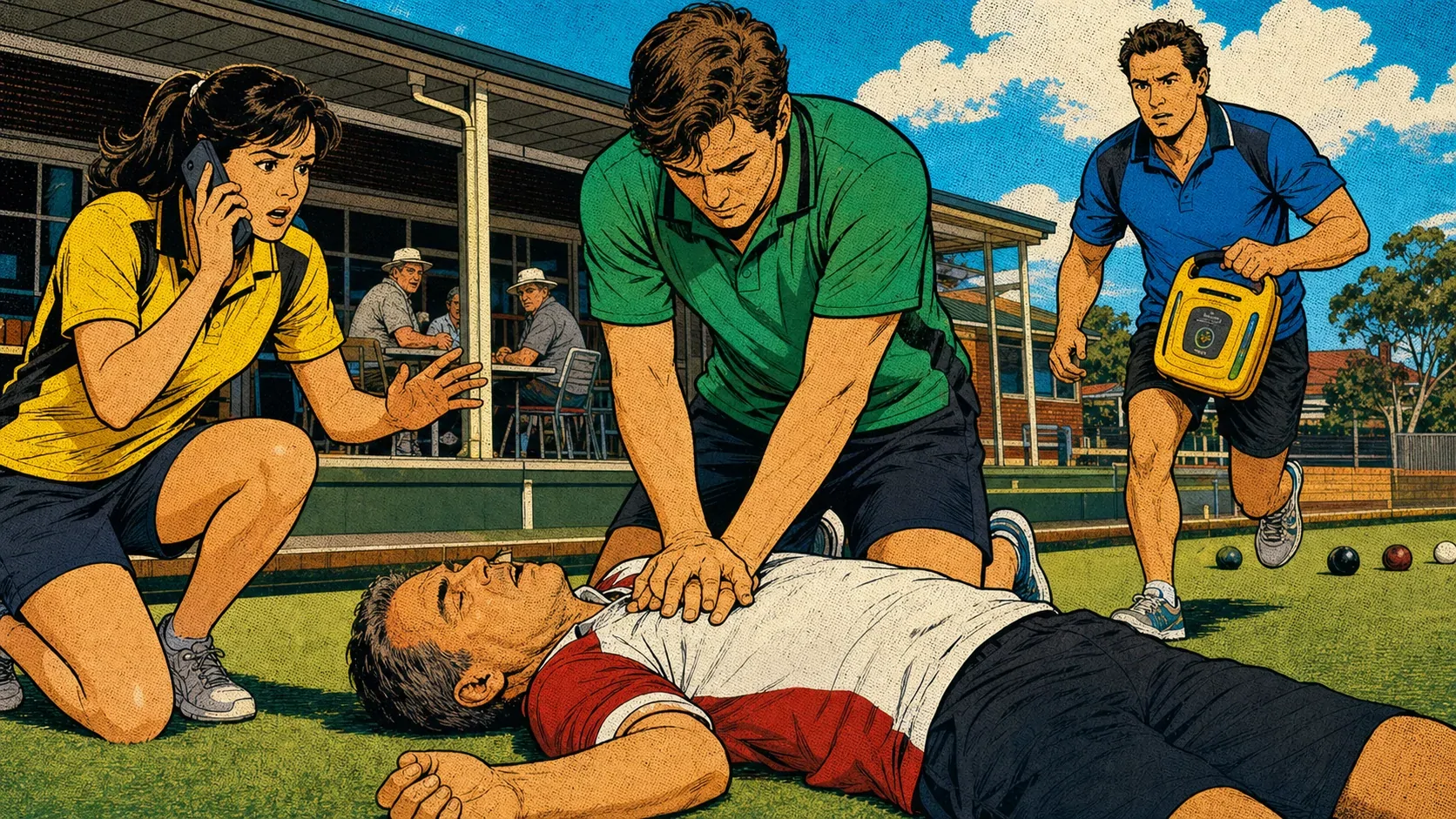
- Call Triple Zero (000) and start CPR. Call Triple Zero (000) and ask for an ambulance. Put the phone on speaker and begin chest compressions.
- Send for an AED. Ask someone to bring the nearest AED. If you are alone, follow the call‑taker’s instructions and use an AED if one is immediately available.
- Use the AED early. Turn it on and follow prompts. Keep going with CPR between analysis/shock prompts.
- Keep the scene organised. Swap compressors if help arrives. Keep the person on a firm surface and keep bystanders clear during AED prompts.
- Prepare a clear handover. Tell responders what happened, when they were last seen well, and what CPR/AED actions were done.
A Real-World SCA Scenario
The scene: A spectator suddenly collapses at a sports club and is not breathing normally.
In this SCA scene, begin with S for Sudden: It can happen without much warning and needs immediate action. That opening prompt matters here because Use SCA when reading about cardiac arrest awareness, AED programs and survival. In the moment, act through DRSABCD: call Triple Zero (000), start CPR if the person is unresponsive and not breathing normally, and use an AED as soon as it arrives. Keep the observation tied to cardiac arrest recognition, bystander CPR and AED action; in practice, watch response, airway and whether breathing is normal while emergency help and an AED are organised rather than reciting the letters without checking the person or setting.
For SCA, A closes the pattern as Arrest. The heart is not pumping blood effectively, so the person is unresponsive and not breathing normally. Before the sequence is treated as complete, relate it to when the collapse happened, what breathing looked like, when CPR started and whether an AED analysed or shocked. A specific trap to avoid is: Do not leave an AED unused because you are worried about doing it wrong.
Where the scenario could change: Do not confuse cardiac arrest with a faint or a person simply sleeping. A remembered sequence must never delay CPR, defibrillation or a Triple Zero (000) call. If the facts no longer fit a stable SCA example, stop rehearsing the acronym and move to the safer emergency, clinical or workplace pathway.
SCA and similar terms
Sudden cardiac arrest, when the heart suddenly stops pumping effectively. It is different from a heart attack, although a heart attack can lead to cardiac arrest.
Here is how the related terms differ:
- OHCA: Out-of-hospital cardiac arrest. It names where the cardiac arrest happened, rather than a different kind of CPR.
- AED: An automated external defibrillator: a device that checks the heart rhythm and gives spoken instructions. CPR is the hands-on care; the AED is the device used alongside it.
- CPR: Cardiopulmonary resuscitation: chest compressions and rescue breaths used when someone is unresponsive and not breathing normally. It is one part of the wider DRSABCD response.
- PAD: Public access defibrillation: making AEDs available in places such as workplaces and sports grounds. It describes access to equipment.
Frequently asked questions
What does SCA stand for?
S means Sudden; C means Cardiac; A means Arrest. SCA means Sudden Cardiac Arrest, a life-threatening emergency where the heart suddenly stops pumping effectively.
When is SCA useful?
Use SCA when reading about cardiac arrest awareness, AED programs and survival. In the moment, act through DRSABCD: call Triple Zero (000), start CPR if the person is unresponsive and not breathing normally, and use an AED as soon as it arrives.
Is SCA the same as a heart attack?
Not always. A heart attack is a circulation problem; cardiac arrest is a collapse where the heart stops pumping effectively. As a first aider, respond to what you see: unresponsive + not breathing normally.
What if I am not sure they are breathing normally?
If you are unsure and they are unresponsive, treat it as not normal breathing and start CPR. Follow Triple Zero (000) instructions.
Can someone gasp during cardiac arrest?
Yes. Gasping is not normal breathing. Start CPR and use an AED.
How is SCA different from OHCA?
SCA is framed here around cardiac arrest recognition, bystander CPR and AED action. OHCA is framed around cardiac arrest outside hospital, bystander CPR and public AED response. They may appear in the same course or incident, but they answer different questions and should not be treated as interchangeable.
When should I call Triple Zero (000)?
Call Triple Zero (000) when the person is seriously ill or injured, is deteriorating, or the urgent warning signs described on this page are present. A remembered sequence must never delay CPR, defibrillation or a Triple Zero (000) call.
Related Acronyms
- Heart Foundation Heart of the Nation
- Heart Foundation Shockingly Simple
- ANZCOR CPR guideline
- ANZCOR AED guideline
This guide is educational and does not replace accredited first aid training, professional medical advice, or directions from emergency services.