
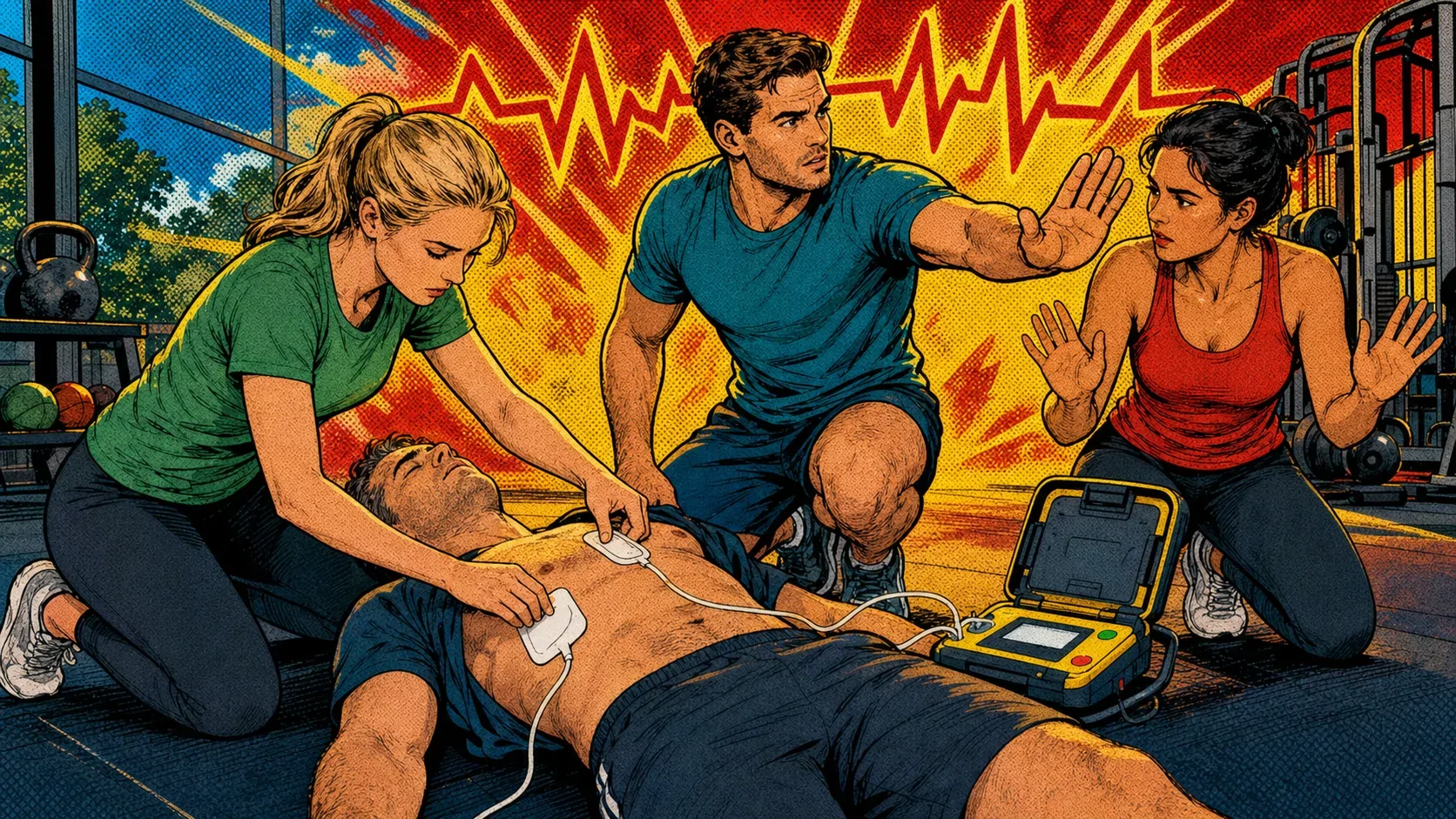

VF means Ventricular Fibrillation, a shockable cardiac arrest rhythm where fast defibrillation can be critical.
Source check: 8 August 2026 · How this page is checked · Report a correction
Quick answer
VF: V means Ventricular; F means Fibrillation. VF means Ventricular Fibrillation, a shockable cardiac arrest rhythm where fast defibrillation can be critical.
When VF helps
Use VF when explaining why AEDs exist. A first aider does not diagnose VF by looking at someone; the AED analyses the rhythm and tells rescuers whether a shock is advised.
Safety boundary: A remembered sequence must never delay CPR, defibrillation or a Triple Zero (000) call. If a real incident is unfolding, act on the person’s condition, call Triple Zero (000) when it is an emergency and follow the operator’s instructions.
Where it sits: VF is commonly read alongside AED, PAD, ALS, OHCA, but each term has a different job. The comparisons later on this page explain those boundaries.
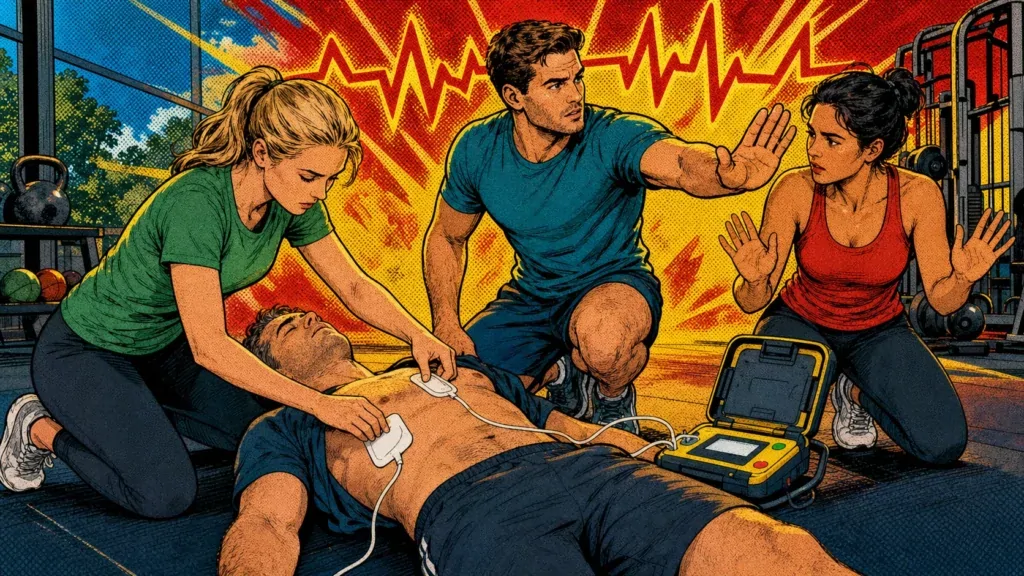
What Does VF Stand For?
| V | Ventricular Relating to the ventricles, the main pumping chambers of the heart. |
| F | Fibrillation Chaotic electrical activity that stops effective pumping. |
Common Mistakes
- Do not try to decide whether the rhythm is VF yourself as a lay first aider.
- Do not delay attaching the AED while discussing the rhythm.
- Do not touch the person while the AED is analysing or delivering a shock.
VF Step-By-Step For Beginners
Use this detailed sequence when learning how VF applies to AED education, cardiac arrest rhythm language and why early defibrillation matters. It connects the letters to observable checks, clear words and a useful handover rather than treating the acronym as a bare list.
- Recognise cardiac arrest. VF is not something you can diagnose by looking at someone. If they are unresponsive and not breathing normally, treat it as cardiac arrest and act.
- Call Triple Zero (000) and send for an AED. Call Triple Zero (000) and ask for an ambulance. Put the phone on speaker. If there are bystanders, point to one person to call and another to grab the nearest AED.
- Start strong CPR early. Begin chest compressions hard and fast in the centre of the chest. Keep going until an AED is attached or another rescuer takes over.
- Turn the AED on and follow prompts. Expose the chest, apply pads as shown, and do what the AED says. Avoid long pauses—compressions matter.
- Stand clear for analysis and shock. When the AED says to analyse or shock, make sure nobody is touching the person. Loudly say “stand clear” and do a quick visual check hands are off.
- Resume CPR straight away. After a shock (or if no shock is advised), restart chest compressions immediately. Keep cycling until the person wakes, breathes normally, or ambulance officers take over.
A Real-World VF Scenario
The scene: An AED announces that a shock is advised during a witnessed cardiac arrest.
In this VF scene, begin with V for Ventricular: Relating to the ventricles, the main pumping chambers of the heart. That opening prompt matters here because Use VF when explaining why AEDs exist. A first aider does not diagnose VF by looking at someone; the AED analyses the rhythm and tells rescuers whether a shock is advised. Keep the observation tied to AED education, cardiac arrest rhythm language and why early defibrillation matters; in practice, watch response, airway and whether breathing is normal while emergency help and an AED are organised rather than reciting the letters without checking the person or setting.
For VF, F closes the pattern as Fibrillation. Chaotic electrical activity that stops effective pumping. Before the sequence is treated as complete, relate it to when the collapse happened, what breathing looked like, when CPR started and whether an AED analysed or shocked. A specific trap to avoid is: Do not touch the person while the AED is analysing or delivering a shock.
Where the scenario could change: Do not try to decide whether the rhythm is VF yourself as a lay first aider. A remembered sequence must never delay CPR, defibrillation or a Triple Zero (000) call. If the facts no longer fit a stable VF example, stop rehearsing the acronym and move to the safer emergency, clinical or workplace pathway.
VF and similar terms
Ventricular fibrillation: a dangerous heart rhythm that can cause cardiac arrest. An AED checks the rhythm; a first aider does not need to identify VF themselves.
Here is how the related terms differ:
- AED: An automated external defibrillator: a device that checks the heart rhythm and gives spoken instructions. CPR is the hands-on care; the AED is the device used alongside it.
- PAD: Public access defibrillation: making AEDs available in places such as workplaces and sports grounds. It describes access to equipment.
- ALS: Advanced life support, provided by appropriately trained health professionals using additional treatments and equipment.
- OHCA: Out-of-hospital cardiac arrest. It names where the cardiac arrest happened, rather than a different kind of CPR.
Frequently asked questions
What does VF stand for?
V means Ventricular; F means Fibrillation. VF means Ventricular Fibrillation, a shockable cardiac arrest rhythm where fast defibrillation can be critical.
When is VF useful?
Use VF when explaining why AEDs exist. A first aider does not diagnose VF by looking at someone; the AED analyses the rhythm and tells rescuers whether a shock is advised.
Can I tell VF without a monitor?
No. VF is an ECG rhythm. As a first aider, focus on recognising cardiac arrest, starting CPR, and using an AED early.
What does “shock advised” mean?
It means the AED has detected a rhythm where a shock may help. Follow prompts, clear everyone, deliver the shock if instructed, then go straight back to CPR.
What if the AED says “no shock advised”?
Keep doing CPR and follow the AED prompts. Some rhythms are not helped by a shock, but CPR and early ambulance care still matter.
How is VF different from AED?
VF is framed here around AED education, cardiac arrest rhythm language and why early defibrillation matters. AED is framed around defibrillation, cardiac arrest and public rescue. They may appear in the same course or incident, but they answer different questions and should not be treated as interchangeable.
When should I call Triple Zero (000)?
Call Triple Zero (000) when the person is seriously ill or injured, is deteriorating, or the urgent warning signs described on this page are present. A remembered sequence must never delay CPR, defibrillation or a Triple Zero (000) call.
Related Acronyms
This guide is educational and does not replace accredited first aid training, professional medical advice, or directions from emergency services.