
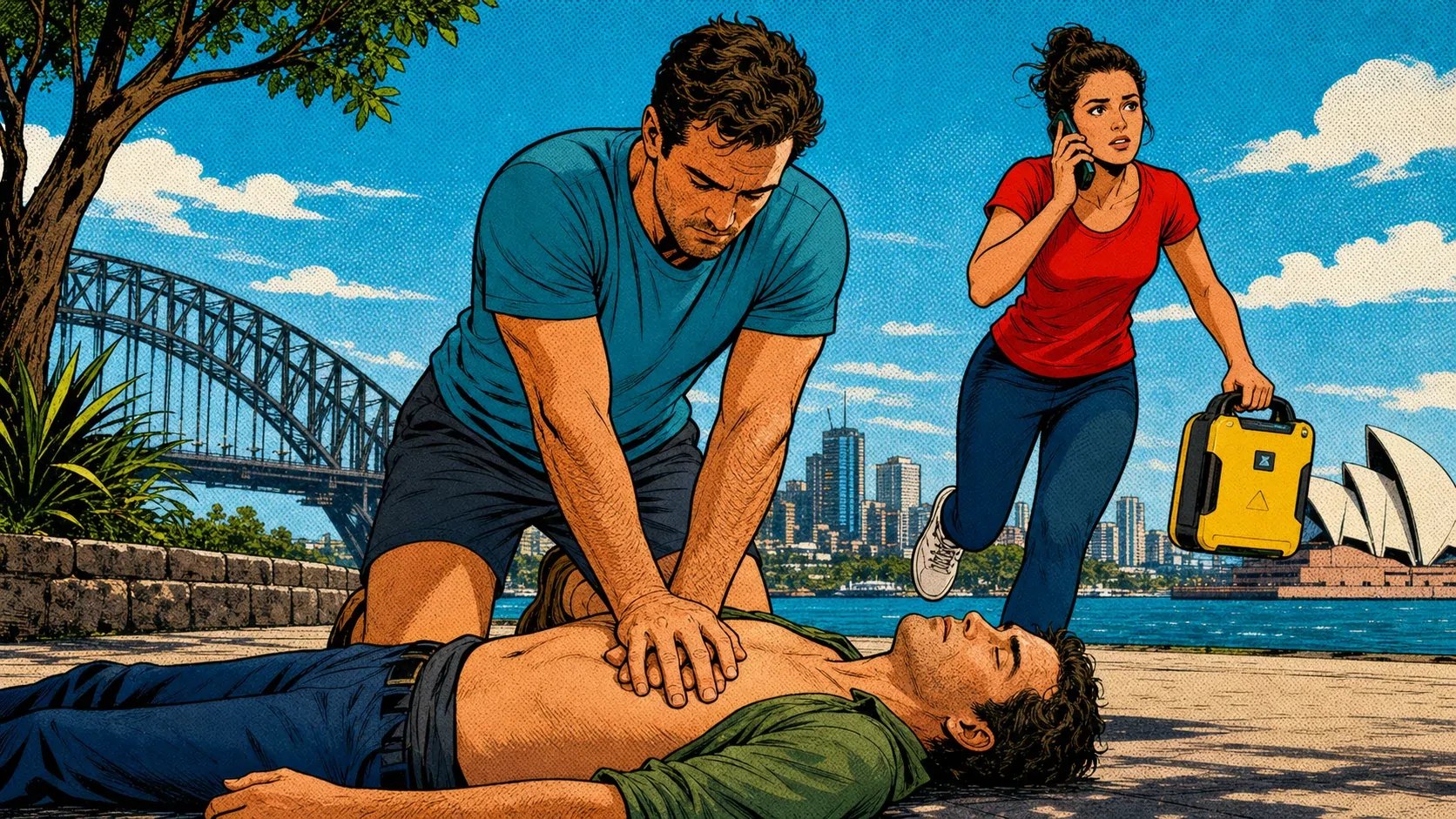

CPR stands for cardiopulmonary resuscitation, the emergency technique used when someone is unresponsive and not breathing normally.
Source check: 8 August 2026 · How this page is checked · Report a correction
Quick answer
CPR: C means Cardio; P means Pulmonary; R means Resuscitation. CPR stands for cardiopulmonary resuscitation, the emergency technique used when someone is unresponsive and not breathing normally.
When CPR helps
Start CPR after DRSABCD when a person is unresponsive and not breathing normally. Call Triple Zero (000) and ask for an ambulance early (use speakerphone if you can) and follow the operator’s advice.
Safety boundary: A remembered sequence must never delay CPR, defibrillation or a Triple Zero (000) call. If a real incident is unfolding, act on the person’s condition, call Triple Zero (000) when it is an emergency and follow the operator’s instructions.
Where it sits: CPR is commonly read alongside BLS, AED, ALS, OHCA, but each term has a different job. The comparisons later on this page explain those boundaries.

What Does CPR Stand For?
| C | Cardio Relating to the heart and circulation. |
| P | Pulmonary Relating to the lungs and breathing. |
| R | Resuscitation Keeping oxygenated blood moving until an AED, ambulance officers or other trained responders can take over. |
Common Mistakes
- Do not check for a pulse as a first aider unless you have been specifically trained to do so.
- Do not stop every few seconds to see whether it is working.
- Do not avoid helping because you are not perfect. Compression-only CPR is better than no CPR if you are unwilling or unable to give breaths.
CPR Step-By-Step For Beginners
Use this detailed sequence when learning how CPR applies to cardiac arrest, collapse and not breathing normally. It connects the letters to observable checks, clear words and a useful handover rather than treating the acronym as a bare list.
- Before: Quick danger + response check. If the person has collapsed, quickly scan for danger (traffic, electricity, water, violence). If it’s not safe, do not enter—call Triple Zero (000). If it is safe, check response by talking to them and gently squeezing shoulders.
- During: Check normal breathing. If they are not responding, check for normal breathing for up to 10 seconds. Gasping is not normal breathing. If they are not breathing normally, start CPR.
- During: Call Triple Zero (000) early. Call Triple Zero (000) and ask for an ambulance. Put your phone on speaker so you can start compressions while you listen and follow the operator’s instructions.
- During: Start compressions. Push hard and fast in the centre of the chest and let the chest rise between compressions. If you are not trained or do not want to give breaths, do compression-only CPR.
- During: Add breaths only if trained. If trained and willing, use the 30 compressions to 2 breaths pattern taught in Australian first aid courses. If you cannot give breaths, keep compressions going.
- During: Use an AED when available. Send someone to get an AED if one is nearby. Keep CPR going while it is being brought to you. Turn it on and follow prompts as soon as it arrives.
- During: Keep pauses short. Minimise long stops for checks. If another helper is available, swap over when you can so compressions stay strong.
- After: Keep going and reassess. Continue until the person starts breathing normally, you are told to stop, you are physically unable to continue, or another trained responder takes over. If they start breathing normally but are not fully alert, keep monitoring and follow 000 instructions.
A Real-World CPR Scenario
The scene: At a gym, a person is unresponsive and only gasping. Gasping is not normal breathing.
Call Triple Zero (000), start CPR and ask another bystander to bring an AED. Follow the call-taker’s instructions.
Where the scenario could change: Do not check for a pulse as a first aider unless you have been specifically trained to do so. A remembered sequence must never delay CPR, defibrillation or a Triple Zero (000) call. If the facts no longer fit a stable CPR example, stop rehearsing the acronym and move to the safer emergency, clinical or workplace pathway.
CPR and similar terms
Cardiopulmonary resuscitation: chest compressions and rescue breaths used when someone is unresponsive and not breathing normally. It is one part of the wider DRSABCD response.
Here is how the related terms differ:
- BLS: Basic life support, including recognising an emergency, getting help, CPR and using an AED. ALS adds care from more highly trained responders.
- AED: An automated external defibrillator: a device that checks the heart rhythm and gives spoken instructions. CPR is the hands-on care; the AED is the device used alongside it.
- ALS: Advanced life support, provided by appropriately trained health professionals using additional treatments and equipment.
- OHCA: Out-of-hospital cardiac arrest. It names where the cardiac arrest happened, rather than a different kind of CPR.
Frequently asked questions
What does CPR stand for?
C means Cardio; P means Pulmonary; R means Resuscitation. CPR stands for cardiopulmonary resuscitation, the emergency technique used when someone is unresponsive and not breathing normally.
When is CPR useful?
Start CPR after DRSABCD when a person is unresponsive and not breathing normally. Call Triple Zero (000) and ask for an ambulance early (use speakerphone if you can) and follow the operator’s advice.
Can I do CPR wrong?
Any attempt is better than no attempt when the person is unresponsive and not breathing normally. Follow the Triple Zero (000) operator’s instructions and keep it simple: compressions and an AED.
Should I check for a pulse?
Most first aid training does not ask lay first aiders to check a pulse. Use responsiveness and normal breathing as your key checks.
Do I have to do mouth-to-mouth?
No. Compression-only CPR is an accepted option if you are unwilling or unable to give breaths.
How is CPR different from BLS?
CPR is framed here around cardiac arrest, collapse and not breathing normally. BLS is framed around collapse, cardiac arrest, unconsciousness and the first minutes before advanced care. They may appear in the same course or incident, but they answer different questions and should not be treated as interchangeable.
When should I call Triple Zero (000)?
Call Triple Zero (000) when the person is seriously ill or injured, is deteriorating, or the urgent warning signs described on this page are present. A remembered sequence must never delay CPR, defibrillation or a Triple Zero (000) call.
Related Acronyms
This guide is educational and does not replace accredited first aid training, professional medical advice, or directions from emergency services.