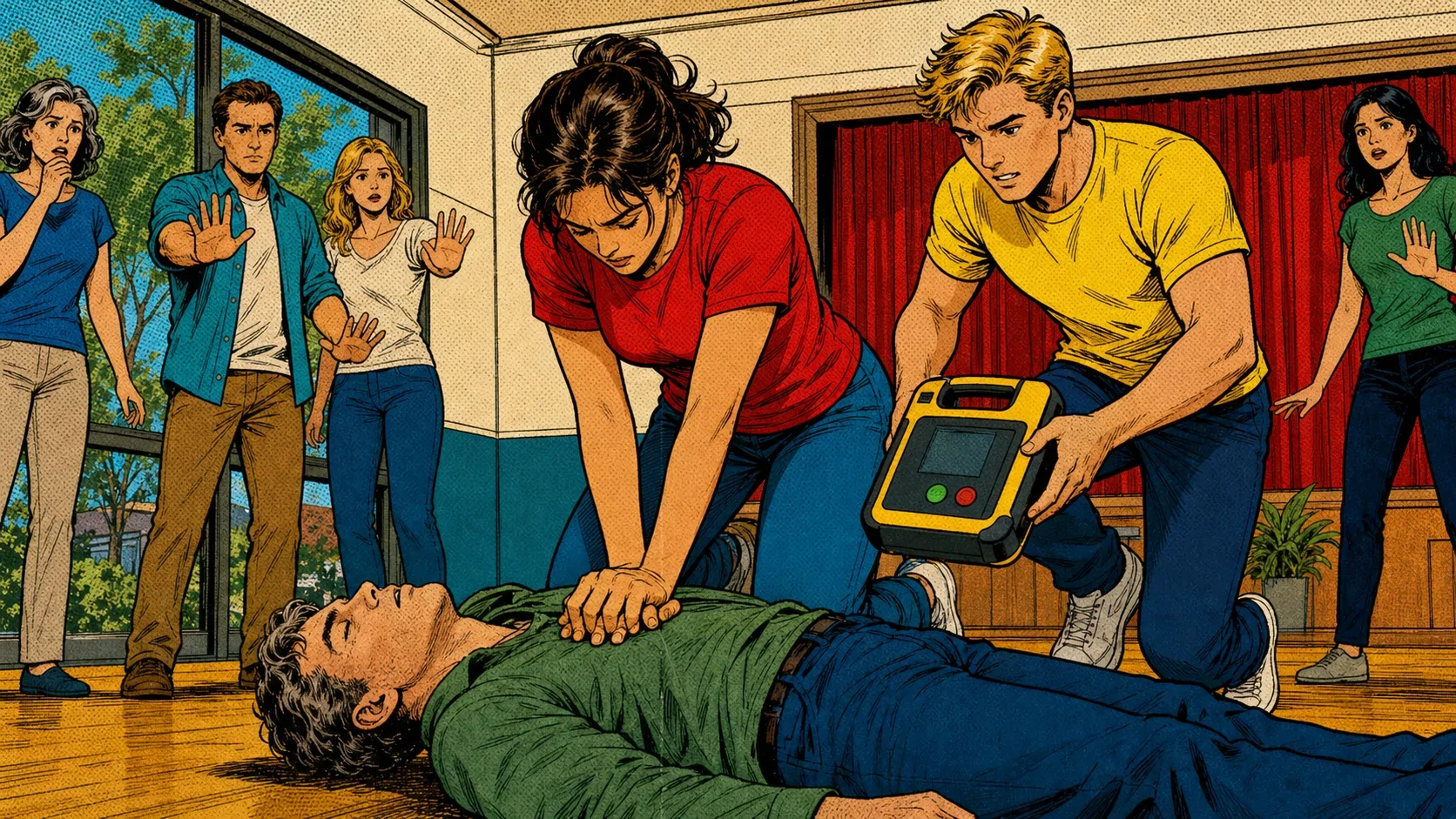

BLS means Basic Life Support: the emergency actions that keep oxygen moving during a life-threatening collapse.
Source check: 8 August 2026 · How this page is checked · Report a correction
Quick answer
BLS: B means Basic; L means Life; S means Support. BLS means Basic Life Support: the emergency actions that keep oxygen moving during a life-threatening collapse.
When BLS helps
Use the idea of BLS when thinking about the whole DRSABCD chain: manage danger, call 000, open the airway, check breathing, start CPR and use an AED as early as possible.
Safety boundary: A remembered sequence must never delay CPR, defibrillation or a Triple Zero (000) call. If a real incident is unfolding, act on the person’s condition, call Triple Zero (000) when it is an emergency and follow the operator’s instructions.
Where it sits: BLS is commonly read alongside ALS, CPR, ROSC, AED, but each term has a different job. The comparisons later on this page explain those boundaries.
What Does BLS Stand For?
| B | Basic The core actions a first aider or responder can begin without hospital equipment. |
| L | Life Focused on preserving breathing, circulation and oxygen delivery. |
| S | Support Keeping the person alive until ambulance care, an AED or advanced responders take over. |
Common Mistakes
- Do not treat BLS as something only health professionals can start.
- Do not separate BLS from calling Triple Zero (000). The ambulance call is part of the survival chain.
- Do not delay an AED while trying to make CPR perfect.
BLS Step-By-Step For Beginners
Use this detailed sequence when learning how BLS applies to collapse, cardiac arrest, unconsciousness and the first minutes before advanced care. It connects the letters to observable checks, clear words and a useful handover rather than treating the acronym as a bare list.
- Think BLS = the basics that save time. BLS is the simple, early response to a life-threatening emergency: safety, call Triple Zero (000), CPR, and AED use if needed.
- Confirm the emergency quickly. If someone is unresponsive and not breathing normally, treat it as a cardiac arrest. Gasping is not normal breathing.
- Call Triple Zero (000) and get help moving. Call Triple Zero (000) and ask for an ambulance. Put the phone on speaker and follow the operator’s instructions.
- Start CPR early. Begin chest compressions in the centre of the chest. If you are not trained or do not want to give breaths, do compression-only CPR.
- Use an AED as soon as it arrives. Send someone for an AED. Turn it on, follow prompts, and return to CPR immediately after analysis/shock messages.
- Hand over clearly. Tell responders what you found (response/breathing), what you did (CPR/AED), and any changes you noticed.
A Real-World BLS Scenario
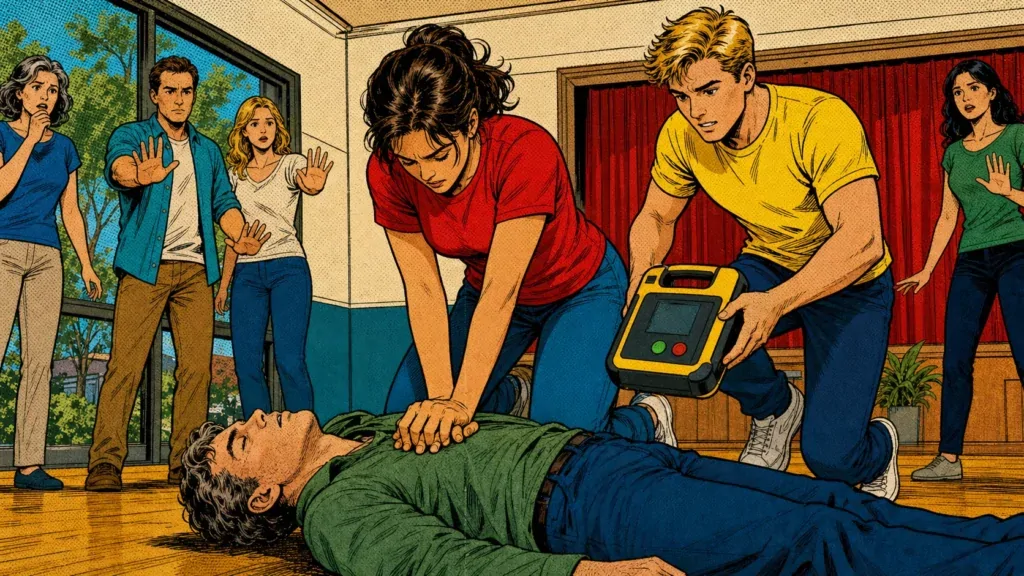
The scene: A bystander team manages the first minutes of a collapse before ambulance officers arrive.
In this BLS scene, begin with B for Basic: The core actions a first aider or responder can begin without hospital equipment. That opening prompt matters here because Use the idea of BLS when thinking about the whole DRSABCD chain: manage danger, call 000, open the airway, check breathing, start CPR and use an AED as early as possible. Keep the observation tied to collapse, cardiac arrest, unconsciousness and the first minutes before advanced care; in practice, watch response, airway and whether breathing is normal while emergency help and an AED are organised rather than reciting the letters without checking the person or setting.
For BLS, S closes the pattern as Support. Keeping the person alive until ambulance care, an AED or advanced responders take over. Before the sequence is treated as complete, relate it to when the collapse happened, what breathing looked like, when CPR started and whether an AED analysed or shocked. A specific trap to avoid is: Do not delay an AED while trying to make CPR perfect.
Where the scenario could change: Do not treat BLS as something only health professionals can start. A remembered sequence must never delay CPR, defibrillation or a Triple Zero (000) call. If the facts no longer fit a stable BLS example, stop rehearsing the acronym and move to the safer emergency, clinical or workplace pathway.
BLS and similar terms
Basic life support, including recognising an emergency, getting help, CPR and using an AED. ALS adds care from more highly trained responders.
Here is how the related terms differ:
- ALS: Advanced life support, provided by appropriately trained health professionals using additional treatments and equipment.
- CPR: Cardiopulmonary resuscitation: chest compressions and rescue breaths used when someone is unresponsive and not breathing normally. It is one part of the wider DRSABCD response.
- ROSC: Return of spontaneous circulation: the heart has started circulating blood again after cardiac arrest. This is an outcome, not a treatment step.
- AED: An automated external defibrillator: a device that checks the heart rhythm and gives spoken instructions. CPR is the hands-on care; the AED is the device used alongside it.
Frequently asked questions
What does BLS stand for?
B means Basic; L means Life; S means Support. BLS means Basic Life Support: the emergency actions that keep oxygen moving during a life-threatening collapse.
When is BLS useful?
Use the idea of BLS when thinking about the whole DRSABCD chain: manage danger, call 000, open the airway, check breathing, start CPR and use an AED as early as possible.
Is BLS the same as CPR?
CPR is one part of BLS. BLS also includes calling Triple Zero (000) early, using an AED, and basic airway/breathing priorities.
Do I need to diagnose the cause first?
No. BLS is about acting on what you can see: unresponsive + not breathing normally = start CPR and use an AED.
What if I am alone?
Call Triple Zero (000) on speaker, then start CPR. Follow the call‑taker’s instructions.
How is BLS different from ALS?
BLS is framed here around collapse, cardiac arrest, unconsciousness and the first minutes before advanced care. ALS is framed around resuscitation course language, ambulance and clinical cardiac arrest care. They may appear in the same course or incident, but they answer different questions and should not be treated as interchangeable.
When should I call Triple Zero (000)?
Call Triple Zero (000) when the person is seriously ill or injured, is deteriorating, or the urgent warning signs described on this page are present. A remembered sequence must never delay CPR, defibrillation or a Triple Zero (000) call.
Related Acronyms
This guide is educational and does not replace accredited first aid training, professional medical advice, or directions from emergency services.