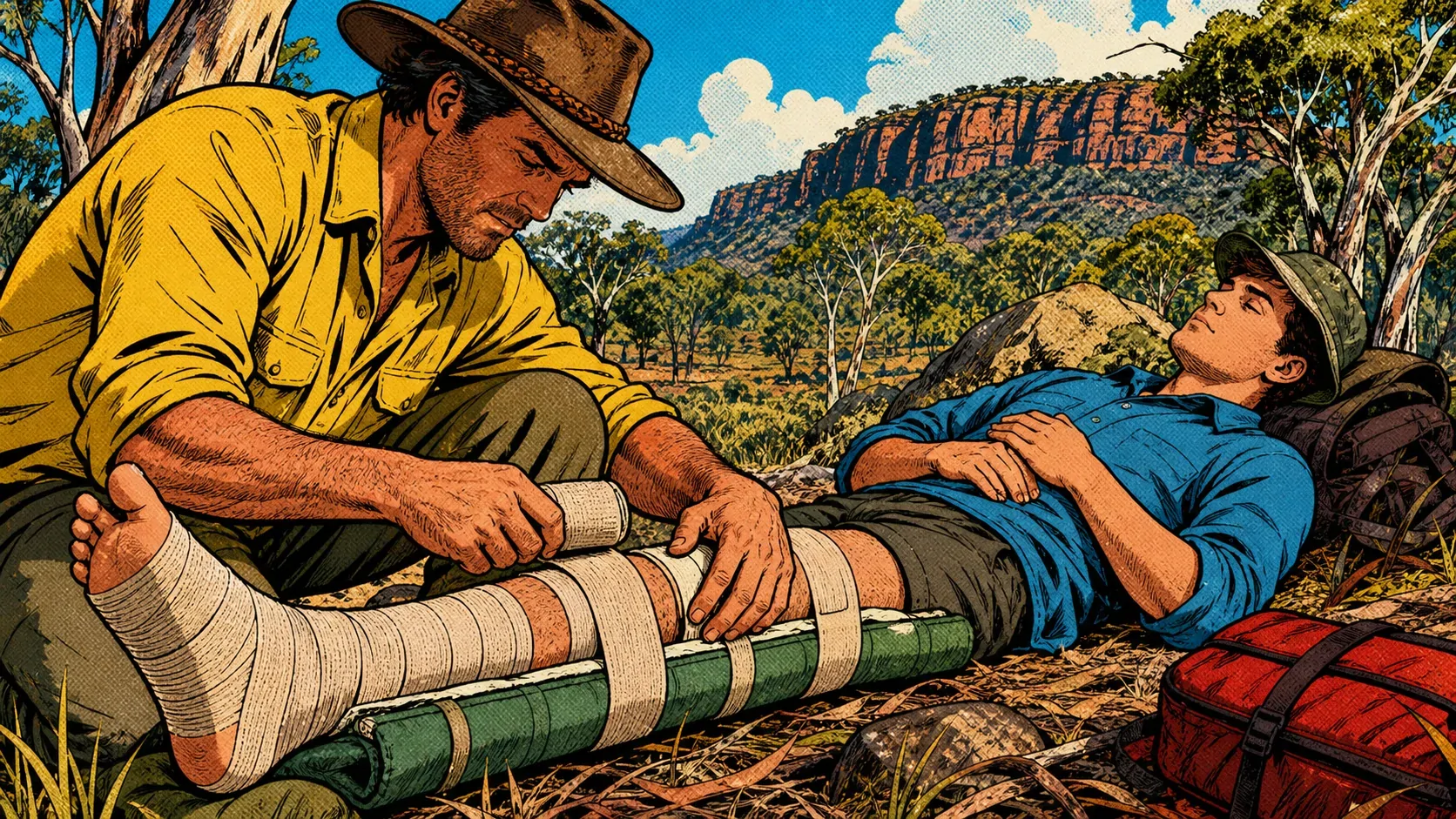

PIT stands for Pressure Immobilisation Technique, often used for serious Australian snake and some venomous bite risks.
Source check: 8 August 2026 · How this page is checked · Report a correction
Quick answer
PIT: P means Pressure; I means Immobilisation; T means Technique. PIT stands for Pressure Immobilisation Technique, often used for serious Australian snake and some venomous bite risks.
When PIT helps
Use PIT only where current first aid guidance says it is appropriate, such as suspected snake bite. Start with DRSABCD, call Triple Zero (000) and ask for an ambulance, keep the person still, and follow emergency-service instructions. Do not apply PIT to every bite; use it only when the guidance matches the animal and situation.
Safety boundary: Do not improvise vomiting, neutralising chemicals or entry into an unsafe atmosphere; use 000 or the Poisons Information Centre as appropriate. If a real incident is unfolding, act on the person’s condition, call Triple Zero (000) when it is an emergency and follow the operator’s instructions.
Where it sits: PIT is commonly read alongside PIC, CO, GHS, HAZCHEM, but each term has a different job. The comparisons later on this page explain those boundaries.

What Does PIT Stand For?
| P | Pressure Apply a firm broad pressure bandage over and beyond the bite area when indicated. |
| I | Immobilisation Keep the limb still with a splint or improvised support. |
| T | Technique A method designed to slow venom movement while waiting for ambulance care. |
Common Mistakes
- Do not wash the bite site if venom identification may be needed.
- Do not cut, suck or tourniquet the bite.
- Do not let the person walk around looking for help.
PIT Step-By-Step For Beginners
Use this detailed sequence when learning how PIT applies to potentially serious venomous bites and immobilisation. It connects the letters to observable checks, clear words and a useful handover rather than treating the acronym as a bare list.
- Start with Triple Zero (000). If a serious snake bite is suspected, call Triple Zero (000) and ask for an ambulance early. Keep the person still and calm.
- Do not wash or cut. Do not wash the bite area (venom traces can help identification). Do not cut, suck, or use a tourniquet.
- Apply firm pressure bandage. If PIT is indicated for the animal and situation, apply a broad firm bandage over and beyond the bite site and up the limb.
- Immobilise the limb. Splint the limb and keep them still. Movement may increase venom spread.
- Hand over clearly. Tell responders what happened, when, and what first aid was applied. Follow emergency-service instructions throughout.
A Real-World PIT Scenario
The scene: A bushwalker reports a possible snake bite to the lower leg and must be kept still while help is called.
In this PIT scene, begin with P for Pressure: Apply a firm broad pressure bandage over and beyond the bite area when indicated. That opening prompt matters here because Use PIT only where current first aid guidance says it is appropriate, such as suspected snake bite. Start with DRSABCD, call Triple Zero (000) and ask for an ambulance, keep the person still, and follow emergency-service instructions. Do not apply PIT to every bite; use it only when the guidance matches the animal and situation. Keep the observation tied to potentially serious venomous bites and immobilisation; in practice, watch scene safety, the product or animal involved, route of exposure, symptoms, timing and whether other people are at risk rather than reciting the letters without checking the person or setting.
For PIT, T closes the pattern as Technique. A method designed to slow venom movement while waiting for ambulance care. Before the sequence is treated as complete, relate it to the label or product name, quantity if known, exposure route, time, symptoms and first aid already attempted. A specific trap to avoid is: Do not let the person walk around looking for help.
Where the scenario could change: Do not wash the bite site if venom identification may be needed. Do not improvise vomiting, neutralising chemicals or entry into an unsafe atmosphere; use 000 or the Poisons Information Centre as appropriate. If the facts no longer fit a stable PIT example, stop rehearsing the acronym and move to the safer emergency, clinical or workplace pathway.
PIT and similar terms
Pressure immobilisation technique, used for particular bites and stings covered in first-aid training. It is not a general treatment for every bite, sting or injury.
Here is how the related terms differ:
- PIC: The Poisons Information Centre, which gives poisoning advice on 13 11 26 in Australia. It is a service to contact, not a treatment sequence.
- CO: Carbon monoxide, a poisonous gas. This is the name of a hazard, not a first-aid action plan.
- GHS: The system behind chemical hazard labels and symbols. It helps explain a product's hazards; a safety data sheet gives more detail.
- HAZCHEM: A code used by emergency services when responding to dangerous-goods incidents. It is not a set of instructions for an untrained bystander.
Frequently asked questions
What does PIT stand for?
P means Pressure; I means Immobilisation; T means Technique. PIT stands for Pressure Immobilisation Technique, often used for serious Australian snake and some venomous bite risks.
When is PIT useful?
Use PIT only where current first aid guidance says it is appropriate, such as suspected snake bite. Start with DRSABCD, call Triple Zero (000) and ask for an ambulance, keep the person still, and follow emergency-service instructions. Do not apply PIT to every bite; use it only when the guidance matches the animal and situation.
Do I use PIT for every bite or sting?
No. PIT is used only for specific Australian envenomation risks. Follow current Australian guidance for the suspected animal.
Should they walk to the car?
Generally no. Keep them still and call Triple Zero (000) and ask for an ambulance. If you must move away from immediate danger, move to safety first, then keep them still.
What if I do not know the animal?
Call Triple Zero (000) and ask for an ambulance if the person is unwell or the bite could be serious. Follow the operator’s instructions and prioritise stillness and safety.
How is PIT different from PIC?
PIT is framed here around potentially serious venomous bites and immobilisation. PIC is framed around poisoning first aid, 13 11 26, household chemicals, medicines, bites and stings. They may appear in the same course or incident, but they answer different questions and should not be treated as interchangeable.
When should I call Triple Zero (000)?
Call Triple Zero (000) when the person is seriously ill or injured, is deteriorating, or the urgent warning signs described on this page are present. Do not improvise vomiting, neutralising chemicals or entry into an unsafe atmosphere; use 000 or the Poisons Information Centre as appropriate.
Related Acronyms
- healthdirect snake bites
- University of Melbourne AVRU pressure immobilisation first aid
- healthdirect Australia
This guide is educational and does not replace accredited first aid training, professional medical advice, or directions from emergency services.