MSDS Meaning: The Older Name for Safety Data Sheets
MSDS means Material Safety Data Sheet, an older term many people still use when they mean SDS.
Since 2026 LOADING
What Does MSDS Stand For?
| M | Material The product, substance or mixture involved. |
| S | Safety Information about safe use and emergency controls. |
| D | Data Hazard and response information. |
| S | Sheet The written document workers may ask for during an incident. |
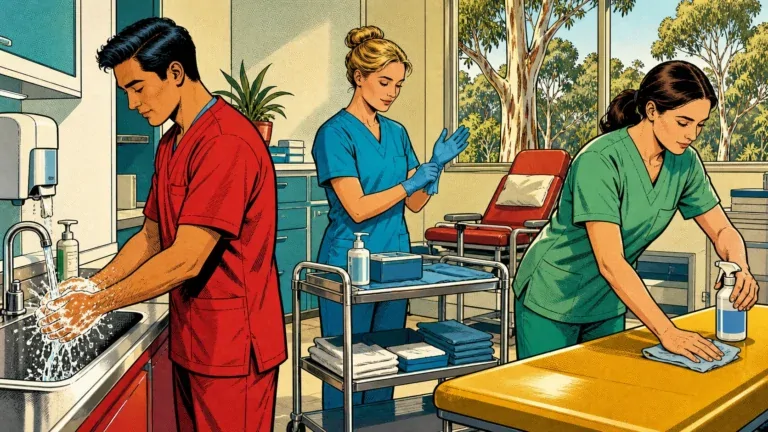
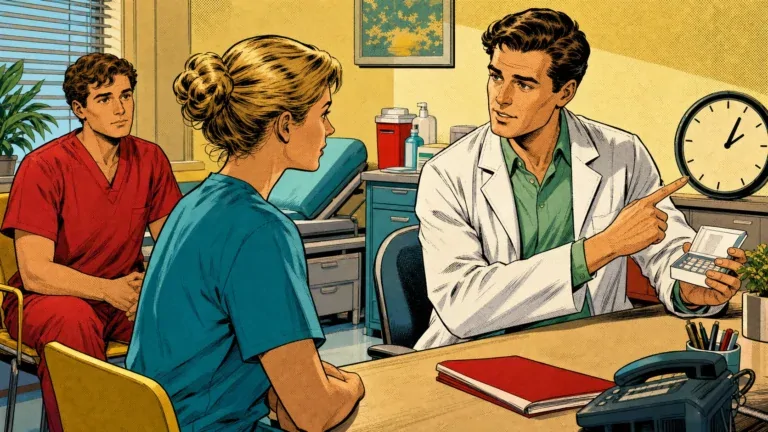
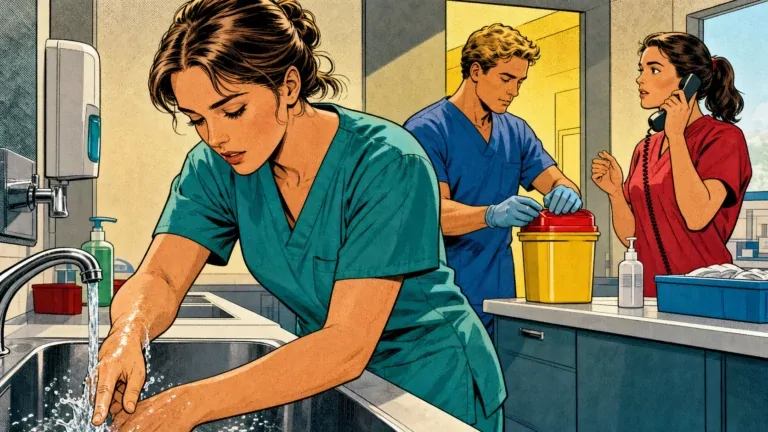
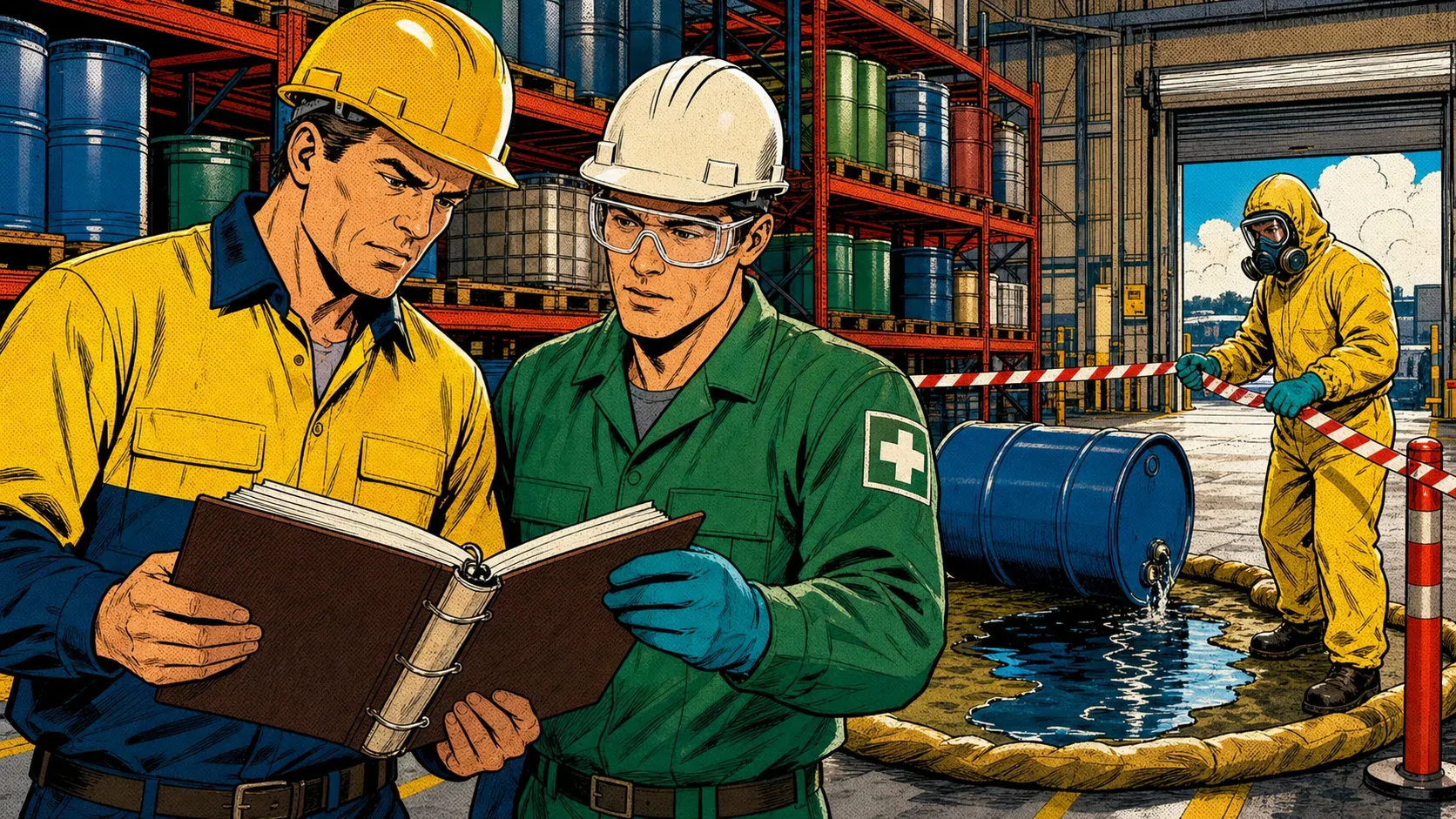
MSDS Comic-Panel Memory Strip
Use the strip as a visual rehearsal: meaning, moment, mistake and handover.
Use It For
Older workplace chemical documents, sds searches and first aid chemical exposure language.
Best Moment
Use MSDS when someone uses the older phrase. In current workplace language, SDS is the cleaner term, but the first aid purpose is the same: identify the chemical and find the emergency advice.
Australian Lens
First aid in Australia starts with safety, Triple Zero (000), calm instructions, and a clear handover to ambulance officers or trained responders.
How To Remember It Under Pressure
Say the letters out loud, point to the problem in front of you, and take the next useful action. Acronyms work because they reduce panic into one small next step.
Common Mistakes
- Do not assume an old MSDS is current enough for a live incident.
- Do not let the naming difference slow the response. Ask for the chemical’s safety data sheet.
- Do not forget to pass the product name and exposure route to 13 11 26 or ambulance officers.
Mini Scenario
Imagine the scene is noisy, everyone is talking at once, and nobody knows who is in charge. The acronym gives the room a spine: check danger, choose the next action, call for help early, and keep the person still, breathing, reassured or receiving CPR as the situation requires.
The Old-School Guide To MSDS
MSDS is useful because it turns a stressful first aid moment into a remembered sequence. The letters stand for Material, Safety, Data and Sheet, but the point is bigger than decoding a word. A good acronym gives you a calm order of operations when the room is noisy, the person is frightened, or the problem is changing quickly.
In real life, people rarely remember a neat paragraph from a manual. They remember a sound, a rhythm, a poster on a wall, a trainer repeating the same phrase, or the first letter of the next thing to check. That is why MSDS deserves more than a tiny definition. It needs the meaning, the moment, the traps, the handover language, and the Australian emergency context all sitting together on one page.
For Australian readers, the most important background is simple: serious illness or injury needs Triple Zero (000), not a perfect memory performance. Use MSDS to organise what you notice and what you do next, while still following emergency operator instructions, workplace procedures, course training, and the person’s own action plan where one exists.
What The Letters Are Really Doing
The first letter, M, points you toward Material: The product, substance or mixture involved. That opening idea matters because first aid can go sideways when people rush at the most visible problem without checking the situation around it.
The final letter, S, leaves you with Sheet: The written document workers may ask for during an incident. A strong acronym should not just start well; it should carry you through to the next practical decision, whether that is monitoring the person, calling for help, giving a clearer handover, or stopping an avoidable mistake.
Material
The product, substance or mixture involved.
Safety
Information about safe use and emergency controls.
Data
Hazard and response information.
Sheet
The written document workers may ask for during an incident.
How To Use MSDS In The Moment
Start by saying the acronym slowly. Then match each letter to the person in front of you. If a letter does not fit the situation, do not force it; keep the overall safety picture in mind and move to the action that protects the person best. The acronym is a guide rail, not a substitute for judgement.
- M is for Material. The product, substance or mixture involved.
- S is for Safety. Information about safe use and emergency controls.
- D is for Data. Hazard and response information.
- S is for Sheet. The written document workers may ask for during an incident.
Keep your language plain. A bystander can help more easily if you say, “You call 000,” “You get the first aid kit,” or “You wait at the entrance for ambulance,” instead of giving a lecture. Acronyms are most powerful when they help the helper communicate clearly.
Before, During And After The Acronym
Before you use MSDS, pause long enough to notice the whole scene. Is there traffic, electricity, smoke, water, aggression, a chemical, a sharp object, blood, a crowd, or a second person at risk? First aid teaching can make acronyms sound tidy, but real emergencies are untidy. The pause does not need to be dramatic; it can be one breath and one scan.
During the acronym, keep narrating what you are doing in ordinary words. This helps the person, reassures bystanders, and stops you from freezing. You might say, “I am checking what happened,” “I am looking at your breathing,” “I am keeping pressure here,” or “We are waiting for the ambulance now.” Clear words make the acronym visible to everyone nearby.
After the first pass, think about handover. What time did it start? What changed? What did the person say? What did you do? Did anyone call 000? Did anyone bring an AED, action plan, medication, first aid kit, safety data sheet, or incident form? The value of MSDS is not only the action in the moment; it is also the cleaner story you can give the next helper.
This before-during-after habit is what makes an acronym feel like an old-school training tool instead of a search result. It teaches the memory hook, then surrounds it with enough practical detail for someone to picture the whole event from first glance to final handover.
The Bit People Usually Forget
The common mistakes around MSDS usually come from tunnel vision. Someone remembers one letter, one trick, or one classroom phrase, then stops looking at the whole emergency. For this acronym, the big caution points are: Do not assume an old MSDS is current enough for a live incident. Do not let the naming difference slow the response. Ask for the chemical’s safety data sheet. Do not forget to pass the product name and exposure route to 13 11 26 or ambulance officers.
A good first aider keeps checking for change. Breathing can become abnormal. Pain can worsen. A person who was talking can become drowsy. Bleeding can soak through. A calm conversation can turn into a need for urgent medical help. Use MSDS as a cycle you can revisit, not a box you tick once and forget.
A Practical Australian Example
Picture a community sports ground, workplace lunch room, school office, training venue, or family gathering. Something has happened quickly and everyone has a different idea. One person is worried about calling an ambulance too early. Another wants to move the injured person. Someone else is searching online. This is exactly where MSDS helps: it gives the group a shared script.
You can say, “Let’s work through MSDS.” That one sentence slows the scene down. It reminds people there is an order: check what is happening, protect yourself and the person, act on urgent findings, call for the right help, and keep notes for handover. The acronym turns scattered concern into a small team.
How It Fits With Other Acronyms
No first aid acronym lives alone. MSDS often sits near other first aid shorthand such as SDS, DRABC, ABC, ABCDE. Some acronyms are for immediate life threats, some are for soft-tissue injury care, some are for medical handover, some are for workplace safety, and some are for course codes or specialist contexts.
The trick is choosing the acronym that matches the moment. If someone is collapsed, unresponsive, not breathing normally, severely bleeding, having a severe allergic reaction, or showing possible stroke signs, urgent action and 000 matter more than debating terminology. If the person is stable, then assessment, documentation, referral, and follow-up acronyms become more useful.
Teaching It So It Sticks
For training notes, posters, toolbox talks, or a quick refresher before a first aid course, teach MSDS as a scene rather than a bare list. Ask: what would you see, what would you say, what would you do with your hands, who would you call, and what would you tell the next responder?
That is why the comic-panel style works so well for first aid acronyms. Each panel can show one decision: notice the problem, choose the next step, avoid the common trap, and hand over clearly. Visual memory matters. A bold picture can pull the right word forward faster than a paragraph when adrenaline is up.
Quick Refresher Before You Leave The Page
If you only remember one thing, remember the job of MSDS: it is a pressure tool. It helps you move from “something is wrong” to “this is the next sensible thing to check, say or do.” That shift matters because panic often shows up as motion without direction.
Read the letters once for meaning, once for action, and once for handover. Meaning tells you what the acronym stands for. Action tells you what should happen next. Handover tells you what another helper, workplace first aider, parent, teacher, coach, nurse, paramedic or emergency operator may need to know.
Do not worry about sounding technical. In a real first aid moment, useful beats impressive. A calm voice, early call for help, clear role for bystanders, steady observation, and honest handover will usually matter more than perfect terminology. MSDS is there to serve those basics.
Quality Check: Does This Acronym Still Help?
A first aid acronym is only worth keeping if it improves the decision in front of you. Use MSDS as a quick self-check, not as a script to follow blindly. If the acronym makes the situation clearer, helps you explain the problem, or reminds you to get help sooner, it is doing its job. If it distracts you from danger, breathing, severe bleeding, anaphylaxis, stroke signs, poisoning, chest pain, or any other urgent warning sign, put the acronym aside and get qualified help moving.
- Meaning: Can you explain MSDS without just reciting the letters?
- Moment: Can you recognise when MSDS fits older workplace chemical documents, SDS searches and first aid chemical exposure language?
- Action: Can you describe the next safe step in plain language?
- Escalation: Would you call Triple Zero (000) early if the person looked seriously ill or injured?
- Handover: Could you tell the next responder what changed, what you noticed and what was already done?
This is also the standard used for the article itself. A good MSDS guide should define the letters, explain the real-world moment, name the common traps, link to nearby acronyms, and leave the reader with a safer next action. That is the difference between a thin glossary entry and a useful long-form first aid reference.
For students, trainers and workplace readers, the best test is whether you can turn the page into a short conversation. Ask one person to describe the scene, one person to choose the next action, and one person to practise the handover. If the group can do that without needing the page open, MSDS has become more than a memory trick; it has become a usable part of first aid thinking.
Practice Questions For Real Understanding
Before you close the page, try using MSDS in three different ways. First, explain it to someone who has never heard the acronym before. Keep the explanation short enough that they could repeat it back. Second, describe a situation where the acronym would be useful, using ordinary details such as where the person is, what bystanders are doing, what has changed, and what help is available. Third, describe a situation where another action would come first because the person is seriously unwell, the scene is unsafe, or emergency help needs to be called immediately.
That last question is important. A strong first aid article should not make an acronym feel bigger than the emergency. MSDS may help with older workplace chemical documents, SDS searches and first aid chemical exposure language, but no acronym should delay basic safety, urgent medical care, or instructions from an emergency operator. The best learners understand both sides: when the acronym helps, and when the situation has moved beyond a memory aid.
If you are using this page for a workplace refresher, first aid course revision, school staff discussion, sports club briefing, or home safety conversation, turn the acronym into a quick verbal drill. Ask: “What would you check first?” “Who would you ask to call 000?” “What would you write down?” “What would you tell ambulance officers or the next trained responder?” Those questions force the acronym to connect with behaviour, which is where first aid knowledge becomes practical.
For personal revision, write MSDS on a blank page and fill in the letters without looking. Then add one sentence beside each letter that begins with a verb: check, ask, call, keep, avoid, tell, watch, record, reassure, or refer. Verbs stop first aid notes from becoming passive. They remind you that the goal is not to admire the acronym; the goal is to take a safer next step.
For group practice, keep the tone calm and realistic. You do not need dramatic role-play. A simple scenario is enough: one person is the helper, one person is the bystander, and one person observes whether the helper used plain language. If the helper can explain MSDS, notice the main risk, ask for help early, and give a clear final handover, the group has understood the useful part of the acronym.
Finally, revisit the source trail after practice. Authoritative first aid guidance changes over time as evidence, training standards and clinical advice develop. That is why a good acronym page should point outward to Australian sources instead of pretending to be the final authority. Use this article to learn the pattern, then use the linked sources, accredited training and local procedures to keep the pattern current.
Source Trail And Sensible Limits
This page keeps the advice anchored to Australian first aid and health sources such as Safe Work Australia hazardous chemicals, WorkSafe Victoria SDS. It is educational, not a replacement for accredited first aid training, professional clinical advice, workplace procedures, or emergency service directions.
Use MSDS as a memory tool. Use your training as the foundation. Use Triple Zero (000) when the situation is serious. And when in doubt, choose the action that gets qualified help moving sooner.
Related Acronyms
This guide is educational and does not replace accredited first aid training, professional medical advice, or directions from emergency services.