
PEACE & LOVE is a newer soft-tissue injury framework that covers early protection and later active recovery.
Source check: 8 August 2026 · How this page is checked · Report a correction
Quick answer
PEACE & LOVE: P means Protect; E means Elevate; A means Avoid anti-inflammatory overuse; C means Compress; E means Educate; LOVE means Load, Optimism, Vascularisation, Exercise. PEACE & LOVE is a newer soft-tissue injury framework that covers early protection and later active recovery.
When PEACE & LOVE helps
Use PEACE & LOVE when comparing newer soft-tissue injury recovery advice with RICE, PRICE, POLICE and RICER. Stop and escalate for assessment if there is severe pain, deformity, numbness/tingling, poor circulation, inability to bear weight, or you suspect fracture, dislocation, or concussion/head injury. It is not a first-minute emergency acronym; it belongs after serious injury has been ruled out and, when needed, a clinician has helped guide recovery.
Safety boundary: An injury acronym comes after danger and life threats; suspected fracture, dislocation, head injury or severe bleeding needs escalation. If a real incident is unfolding, act on the person’s condition, call Triple Zero (000) when it is an emergency and follow the operator’s instructions.
Where it sits: PEACE & LOVE is commonly read alongside PRICE, POLICE, RICER, NO HARM, but each term has a different job. The comparisons later on this page explain those boundaries.
Framework status: PEACE & LOVE is an international rehabilitation framework, not an Australian emergency first aid standard. Its origin source supports the concept; medication and rehabilitation decisions still require appropriate professional advice.

What Does PEACE & LOVE Stand For?
| P | Protect Protect or unload the injured area briefly to reduce aggravation. |
| E | Elevate Elevate when practical. |
| A | Avoid anti-inflammatory overuse Be cautious with anti-inflammatory strategies and seek professional advice for medicine decisions. |
| C | Compress Use compression where appropriate and comfortable. |
| E | Educate Understand the injury and avoid passive-treatment myths. |
| LOVE | Load, Optimism, Vascularisation, Exercise The later phase encourages appropriate loading, confidence, blood-flow activity and exercise-based recovery. |
Common Mistakes
- Do not use PEACE & LOVE for suspected fracture, dislocation, concussion, severe bleeding or collapse.
- Do not make medication decisions from an acronym alone.
- Do not jump to exercise if pain, swelling, weakness or function is worsening.
PEACE & LOVE Step-By-Step For Beginners
Use this detailed sequence when learning how PEACE & LOVE applies to new soft tissue injury acronyms, RICE versus PEACE and LOVE, sports injury recovery and physiotherapy education. It connects the letters to observable checks, clear words and a useful handover rather than treating the acronym as a bare list.
- Before: Not a first-minute emergency tool. PEACE & LOVE is a recovery framework. In the first minutes, prioritise safety, DRSABCD concerns, bleeding control, and escalation when needed. If the person is very unwell or the injury looks serious, choose assessment over acronym debate.
- PEACE (early phase). Protect, Elevate, avoid anti-inflammatory overuse, Compress, and Educate. The goal is to settle symptoms and avoid common myths in the early phase.
- LOVE (later phase). Load, Optimism, Vascularisation, and Exercise: gradual return of activity, confidence, gentle blood-flow movement, and exercise-based rehab as appropriate.
- The stop line. If there is severe pain, deformity, numbness/tingling, poor circulation, inability to bear weight, or suspected fracture/dislocation or concussion, stop and arrange medical assessment. If it feels urgent or severe, call Triple Zero (000).
A Real-World PEACE & LOVE Scenario
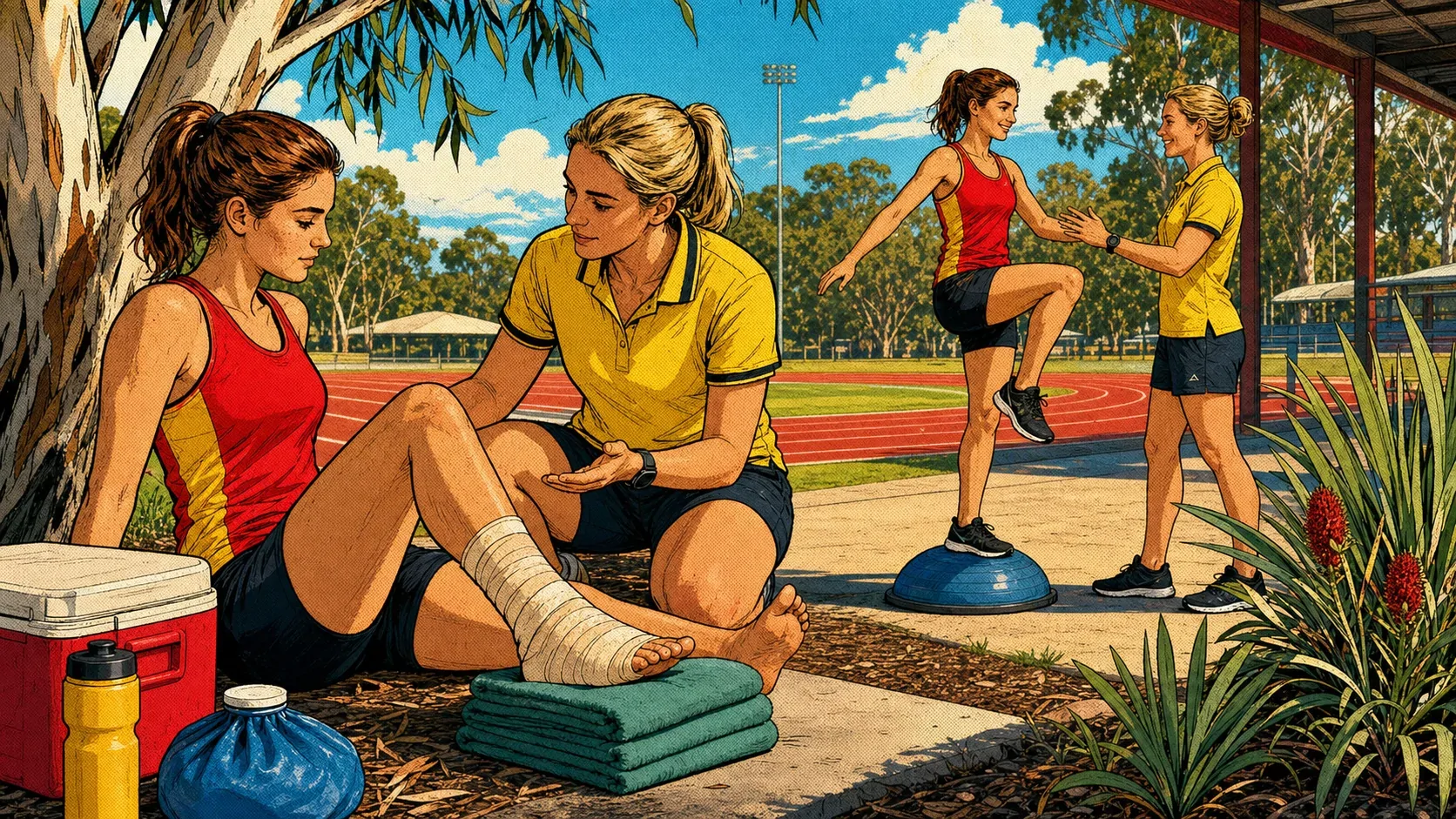
The scene: A physiotherapy discussion separates early injury management from the longer recovery phase.
In this PEACE & LOVE scene, begin with P for Protect: Protect or unload the injured area briefly to reduce aggravation. That opening prompt matters here because Use PEACE & LOVE when comparing newer soft-tissue injury recovery advice with RICE, PRICE, POLICE and RICER. Stop and escalate for assessment if there is severe pain, deformity, numbness/tingling, poor circulation, inability to bear weight, or you suspect fracture, dislocation, or concussion/head injury. It is not a first-minute emergency acronym; it belongs after serious injury has been ruled out and, when needed, a clinician has helped guide recovery. Keep the observation tied to new soft tissue injury acronyms, RICE versus PEACE and LOVE, sports injury recovery and physiotherapy education; in practice, watch the mechanism, deformity, circulation, sensation, function and any signs that the problem is more than a minor injury rather than reciting the letters without checking the person or setting.
For PEACE & LOVE, LOVE closes the pattern as Load, Optimism, Vascularisation, Exercise. The later phase encourages appropriate loading, confidence, blood-flow activity and exercise-based recovery. Before the sequence is treated as complete, relate it to how the injury happened, where it hurts, what changed, what care was given and whether function or circulation deteriorated. A specific trap to avoid is: Do not jump to exercise if pain, swelling, weakness or function is worsening.
Where the scenario could change: Do not use PEACE & LOVE for suspected fracture, dislocation, concussion, severe bleeding or collapse. An injury acronym comes after danger and life threats; suspected fracture, dislocation, head injury or severe bleeding needs escalation. If the facts no longer fit a stable PEACE & LOVE example, stop rehearsing the acronym and move to the safer emergency, clinical or workplace pathway.
PEACE & LOVE and similar terms
A way of talking about early soft-tissue injury care and later recovery. The later exercise steps belong in a recovery plan, with professional advice where needed.
Here is how the related terms differ:
- PRICE: An injury-care memory aid for protection, rest, ice, compression and elevation. It concerns soft-tissue injuries, after urgent problems have been ruled out.
- POLICE: An injury-care memory aid that includes protecting the injury and gradually using it as appropriate. It is often discussed in rehabilitation, rather than as an emergency response.
- RICER: Rest, ice, compression, elevation and referral: a familiar injury-care memory aid. Its final letter reminds you to arrange assessment when needed.
- NO HARM: A reminder of things to avoid after a soft-tissue injury. It focuses on avoiding further harm, rather than assessing whether someone can return to sport.
Frequently asked questions
What does PEACE & LOVE stand for?
P means Protect; E means Elevate; A means Avoid anti-inflammatory overuse; C means Compress; E means Educate; LOVE means Load, Optimism, Vascularisation, Exercise. PEACE & LOVE is a newer soft-tissue injury framework that covers early protection and later active recovery.
When is PEACE & LOVE useful?
Use PEACE & LOVE when comparing newer soft-tissue injury recovery advice with RICE, PRICE, POLICE and RICER. Stop and escalate for assessment if there is severe pain, deformity, numbness/tingling, poor circulation, inability to bear weight, or you suspect fracture, dislocation, or concussion/head injury. It is not a first-minute emergency acronym; it belongs after serious injury has been ruled out and, when needed, a clinician has helped guide recovery.
Is PEACE & LOVE a first aid acronym?
It is mostly a recovery framework used in sports medicine discussions. Use it after serious injury has been ruled out and, when needed, a clinician has guided the plan.
Do I need anti-inflammatories?
Medicine decisions should be made with a clinician or pharmacist. Avoid making medication choices from an acronym alone.
When should I escalate instead of “rehab at home”?
Escalate for deformity, severe pain, numbness/tingling, poor circulation, inability to bear weight, suspected fracture/dislocation, or any concussion concern. If it feels urgent or severe, call Triple Zero (000).
How is PEACE & LOVE different from PRICE?
PEACE & LOVE is framed here around new soft tissue injury acronyms, RICE versus PEACE and LOVE, sports injury recovery and physiotherapy education. PRICE is framed around sprains, strains, soft tissue injury care, sports first aid and RICE versus RICER comparisons. They may appear in the same course or incident, but they answer different questions and should not be treated as interchangeable.
When should I call Triple Zero (000)?
Call Triple Zero (000) when the person is seriously ill or injured, is deteriorating, or the urgent warning signs described on this page are present. An injury acronym comes after danger and life threats; suspected fracture, dislocation, head injury or severe bleeding needs escalation.
Related Acronyms
This guide is educational and does not replace accredited first aid training, professional medical advice, or directions from emergency services.