
POLICE means Protection, Optimal Loading, Ice, Compression and Elevation, an injury-care acronym that evolved from PRICE.
Source check: 8 August 2026 · How this page is checked · Report a correction
Quick answer
POLICE: P means Protection; OL means Optimal Loading; I means Ice; C means Compression; E means Elevation. POLICE means Protection, Optimal Loading, Ice, Compression and Elevation, an injury-care acronym that evolved from PRICE.
When POLICE helps
Use POLICE when reading modern sports injury or physiotherapy discussions about avoiding too much rest after soft-tissue injury. For first aiders, the safe message is simple: protect the injury, avoid making it worse, and escalate for assessment if pain is severe, there is deformity, numbness/tingling, poor circulation, inability to bear weight, or symptoms are not improving.
Safety boundary: An injury acronym comes after danger and life threats; suspected fracture, dislocation, head injury or severe bleeding needs escalation. If a real incident is unfolding, act on the person’s condition, call Triple Zero (000) when it is an emergency and follow the operator’s instructions.
Where it sits: POLICE is commonly read alongside PRICE, PEACE & LOVE, RICER, NO HARM, but each term has a different job. The comparisons later on this page explain those boundaries.
Framework status: POLICE comes from international sports-medicine literature and is not a nationally mandated Australian first aid protocol. Optimal loading requires injury-appropriate professional judgement, not aggressive self-testing.
What Does POLICE Stand For?
| P | Protection Protect the injured tissue from aggravation in the early phase. |
| OL | Optimal Loading Use appropriate, progressive movement or loading when safe rather than complete rest. |
| I | Ice Cold may help pain for some people when used cautiously. |
| C | Compression Compression may help support the area and manage swelling if circulation stays normal. |
| E | Elevation Elevation can help comfort and swelling when practical. |
Common Mistakes
- Do not start loading an injury aggressively just because POLICE includes Optimal Loading.
- Do not ignore deformity, severe pain, numbness, inability to bear weight or head-injury signs.
- Do not use POLICE as a replacement for medical or physiotherapy assessment when symptoms are not improving.
POLICE Step-By-Step For Beginners
Use this detailed sequence when learning how POLICE applies to modern soft tissue injury care, sports injury rehabilitation language and PRICE versus POLICE searches. It connects the letters to observable checks, clear words and a useful handover rather than treating the acronym as a bare list.
- P – Protection. Protect the area and avoid aggravating movement early on.
- OL – Optimal loading. If safe, use gentle, progressive movement rather than complete rest for days. If you are unsure what the injury is, the pain is severe, or function is clearly reduced, choose referral over experimentation.
- I – Ice. Cold may help pain for some people. Use a cloth barrier and short periods.
- C – Compression. Support the area if appropriate and keep checking circulation and sensation beyond the bandage.
- E – Elevation. Elevate when practical for comfort.
- After: Keep the stop line active. If pain is worsening, swelling is increasing, the person cannot use the limb normally, or there are red flags (deformity, numbness/tingling, poor circulation, head injury concern), stop and arrange assessment. If it feels urgent or an ambulance is needed, call Triple Zero (000).
A Real-World POLICE Scenario
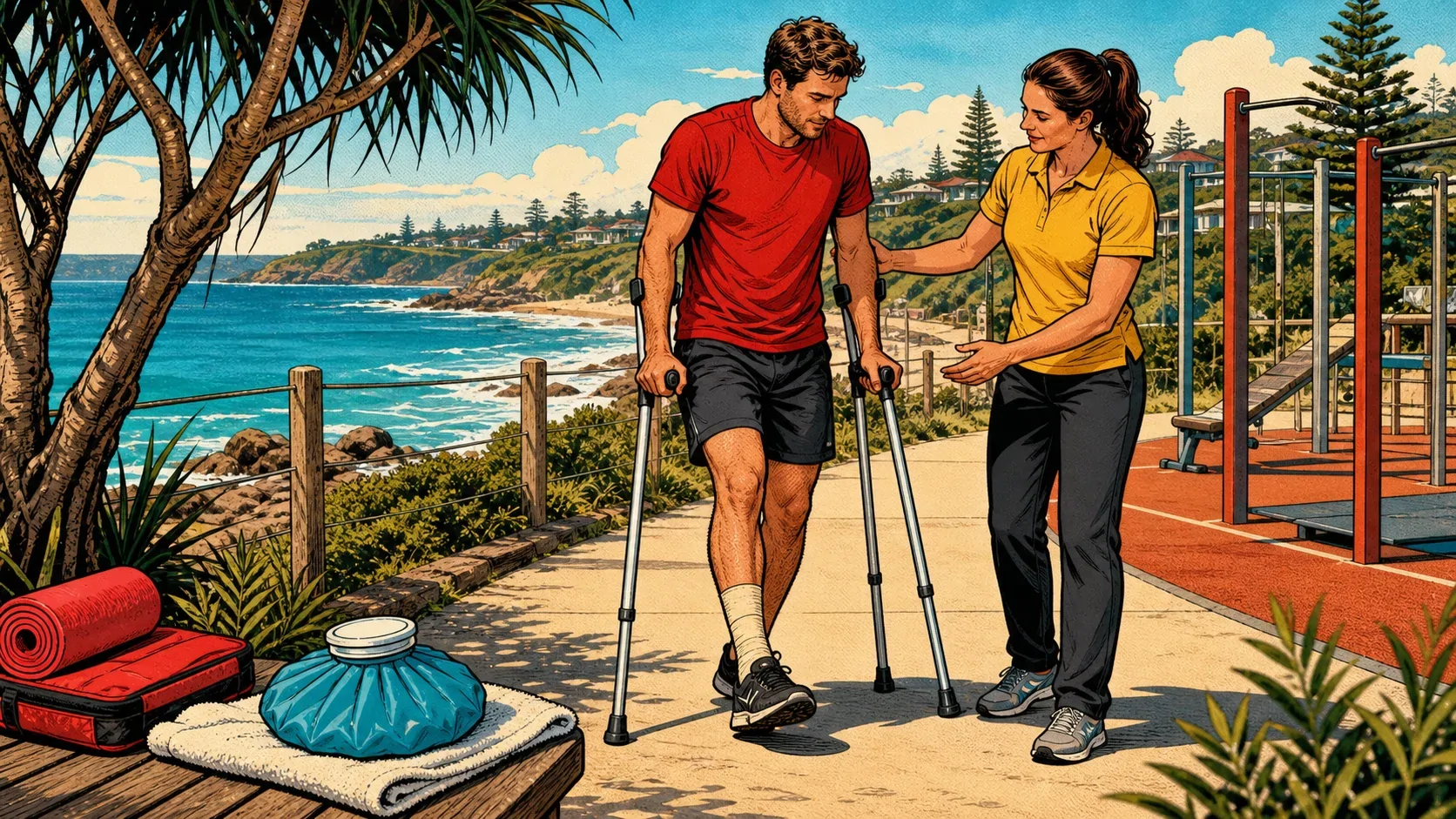
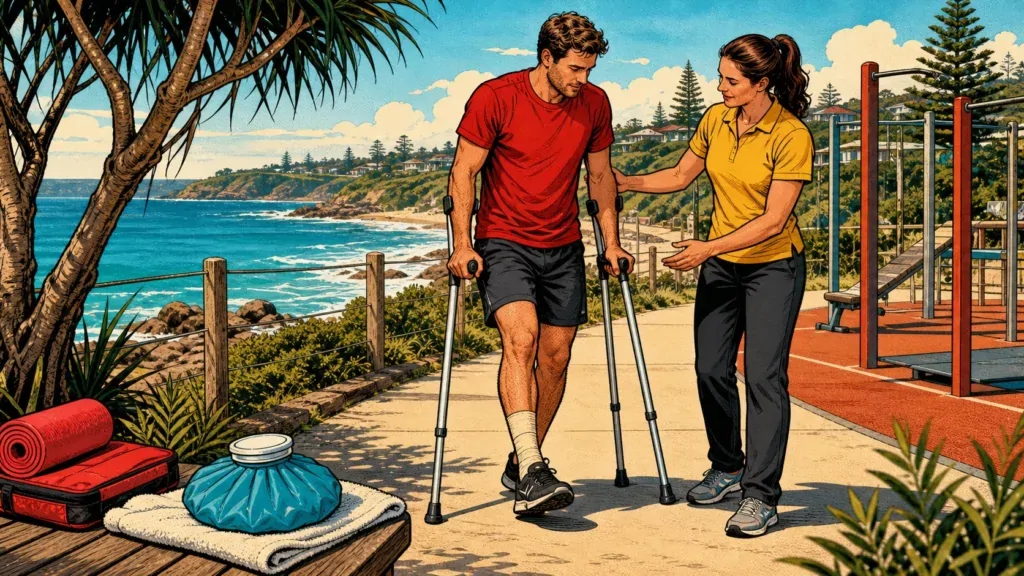
The scene: A recovering athlete moves from protection and load management toward safe cardiovascular activity.
In this POLICE scene, begin with P for Protection: Protect the injured tissue from aggravation in the early phase. That opening prompt matters here because Use POLICE when reading modern sports injury or physiotherapy discussions about avoiding too much rest after soft-tissue injury. For first aiders, the safe message is simple: protect the injury, avoid making it worse, and escalate for assessment if pain is severe, there is deformity, numbness/tingling, poor circulation, inability to bear weight, or symptoms are not improving. Keep the observation tied to modern soft tissue injury care, sports injury rehabilitation language and PRICE versus POLICE searches; in practice, watch the mechanism, deformity, circulation, sensation, function and any signs that the problem is more than a minor injury rather than reciting the letters without checking the person or setting.
For POLICE, E closes the pattern as Elevation. Elevation can help comfort and swelling when practical. Before the sequence is treated as complete, relate it to how the injury happened, where it hurts, what changed, what care was given and whether function or circulation deteriorated. A specific trap to avoid is: Do not use POLICE as a replacement for medical or physiotherapy assessment when symptoms are not improving.
Where the scenario could change: Do not start loading an injury aggressively just because POLICE includes Optimal Loading. An injury acronym comes after danger and life threats; suspected fracture, dislocation, head injury or severe bleeding needs escalation. If the facts no longer fit a stable POLICE example, stop rehearsing the acronym and move to the safer emergency, clinical or workplace pathway.
POLICE and similar terms
An injury-care memory aid that includes protecting the injury and gradually using it as appropriate. It is often discussed in rehabilitation, rather than as an emergency response.
Here is how the related terms differ:
- PRICE: An injury-care memory aid for protection, rest, ice, compression and elevation. It concerns soft-tissue injuries, after urgent problems have been ruled out.
- PEACE & LOVE: A way of talking about early soft-tissue injury care and later recovery. The later exercise steps belong in a recovery plan, with professional advice where needed.
- RICER: Rest, ice, compression, elevation and referral: a familiar injury-care memory aid. Its final letter reminds you to arrange assessment when needed.
- NO HARM: A reminder of things to avoid after a soft-tissue injury. It focuses on avoiding further harm, rather than assessing whether someone can return to sport.
Frequently asked questions
What does POLICE stand for?
P means Protection; OL means Optimal Loading; I means Ice; C means Compression; E means Elevation. POLICE means Protection, Optimal Loading, Ice, Compression and Elevation, an injury-care acronym that evolved from PRICE.
When is POLICE useful?
Use POLICE when reading modern sports injury or physiotherapy discussions about avoiding too much rest after soft-tissue injury. For first aiders, the safe message is simple: protect the injury, avoid making it worse, and escalate for assessment if pain is severe, there is deformity, numbness/tingling, poor circulation, inability to bear weight, or symptoms are not improving.
What does ‘optimal loading’ mean in plain English?
The right amount of movement for the injury and stage of recovery. Too much can worsen the injury; too little can slow recovery. When unsure, get professional advice.
When should I stop and escalate?
Escalate for deformity, severe pain, numbness/tingling, poor circulation, inability to bear weight, suspected fracture/dislocation, concussion concerns, or symptoms not improving. If it feels urgent or an ambulance is needed, call Triple Zero (000).
Is POLICE first aid or rehab?
It is often used in rehab discussions. First aiders should keep it simple: protect, don’t worsen it, and refer when it looks significant.
How is POLICE different from PRICE?
POLICE is framed here around modern soft tissue injury care, sports injury rehabilitation language and PRICE versus POLICE searches. PRICE is framed around sprains, strains, soft tissue injury care, sports first aid and RICE versus RICER comparisons. They may appear in the same course or incident, but they answer different questions and should not be treated as interchangeable.
When should I call Triple Zero (000)?
Call Triple Zero (000) when the person is seriously ill or injured, is deteriorating, or the urgent warning signs described on this page are present. An injury acronym comes after danger and life threats; suspected fracture, dislocation, head injury or severe bleeding needs escalation.
Related Acronyms
This guide is educational and does not replace accredited first aid training, professional medical advice, or directions from emergency services.