
SBAR is a communication acronym for Situation, Background, Assessment and Recommendation.
Source check: 8 August 2026 · How this page is checked · Report a correction
Quick answer
SBAR: S means Situation; B means Background; A means Assessment; R means Recommendation. SBAR is a communication acronym for Situation, Background, Assessment and Recommendation.
When SBAR helps
Use SBAR when information needs to be passed clearly to a supervisor, nurse, first aid officer, GP receptionist, workplace responder or emergency service. It is a communication tool, not a treatment plan.
Safety boundary: Structured questions support care, but questioning must stop when urgent treatment or a 000 call is needed. If a real incident is unfolding, act on the person’s condition, call Triple Zero (000) when it is an emergency and follow the operator’s instructions.
Where it sits: SBAR is commonly read alongside GCS, IMIST-AMBO, ISBAR, OPQRST, but each term has a different job. The comparisons later on this page explain those boundaries.
Framework status: SBAR is one structured communication tool in Australian Commission resources. It is not a treatment algorithm or the only acceptable national handover format; organisations may specify another local tool.

What Does SBAR Stand For?
| S | Situation What is happening right now? |
| B | Background What context matters? |
| A | Assessment What have you seen, measured or noticed? |
| R | Recommendation What help, review or next step is needed? |
Common Mistakes
- Do not bury the urgent problem in background detail.
- Do not present guesses as facts.
- Do not delay emergency escalation while polishing the handover.
A Real-World SBAR Scenario
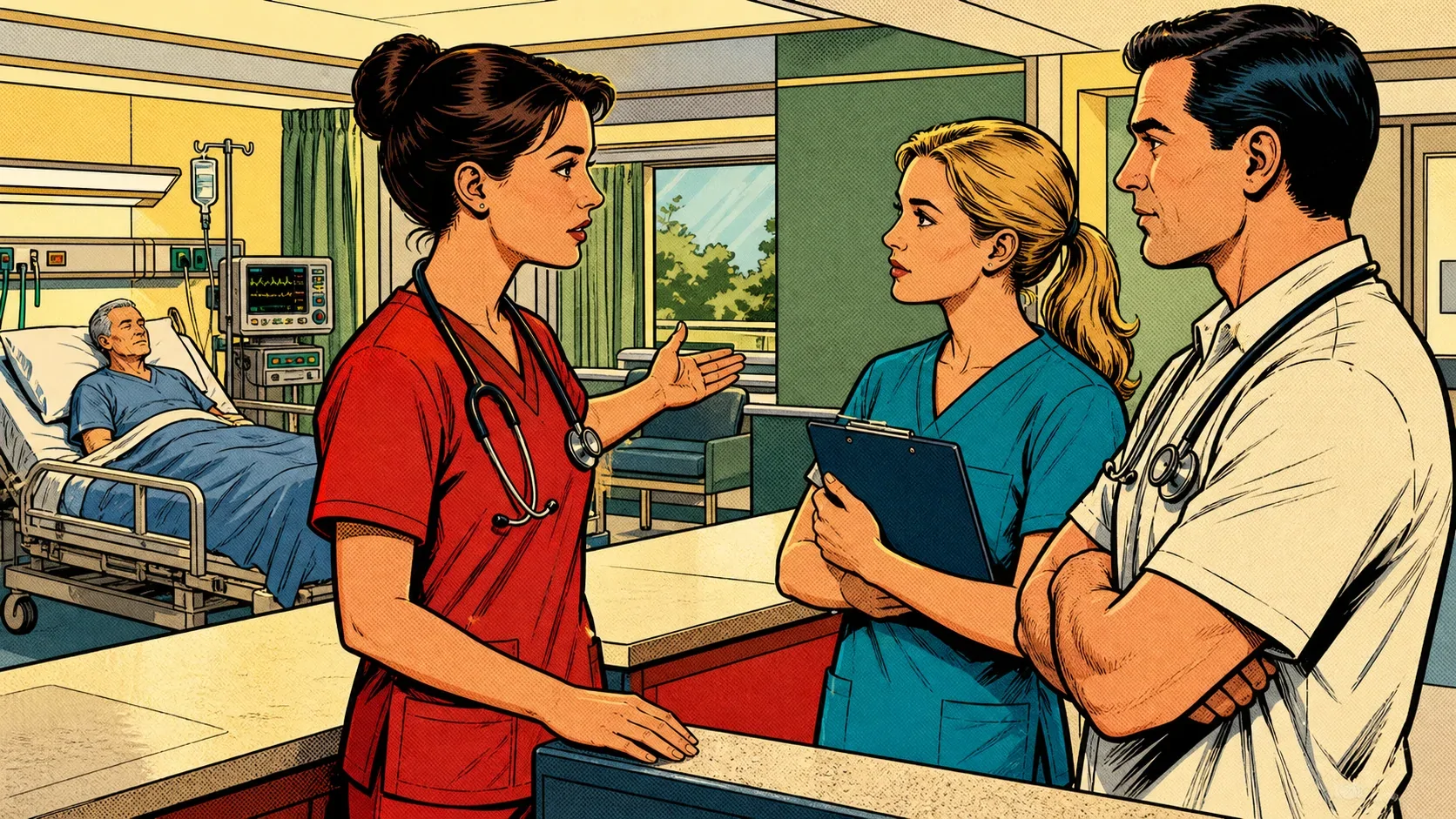
The scene: A first aid officer escalates a deteriorating worker to a health professional using a concise framework.
In this SBAR scene, begin with S for Situation: What is happening right now? That opening prompt matters here because Use SBAR when information needs to be passed clearly to a supervisor, nurse, first aid officer, GP receptionist, workplace responder or emergency service. It is a communication tool, not a treatment plan. Keep the observation tied to clinical handover, workplace first aid communication, nurse handover and escalation language; in practice, watch what changed from the person’s normal state, the timeline, relevant symptoms and the response to care rather than reciting the letters without checking the person or setting.
For SBAR, R closes the pattern as Recommendation. What help, review or next step is needed? Before the sequence is treated as complete, relate it to the minimum facts the next responder needs to act without making the person repeat the whole story. A specific trap to avoid is: Do not delay emergency escalation while polishing the handover.
Where the scenario could change: Do not bury the urgent problem in background detail. Structured questions support care, but questioning must stop when urgent treatment or a 000 call is needed. If the facts no longer fit a stable SBAR example, stop rehearsing the acronym and move to the safer emergency, clinical or workplace pathway.
Letter-By-Letter Practical Notes
The short table above is designed for scanning. These notes are for readers who want to understand how each component affects a real decision about clinical handover, workplace first aid communication, nurse handover and escalation language.
- S — Situation: As the opening prompt, this means: What is happening right now? In a SBAR situation, the useful check is whether that instruction changes what you observe, what you do next or what you need to report.
- B — Background: As the step 2 of the sequence, this means: What context matters? In a SBAR situation, the useful check is whether that instruction changes what you observe, what you do next or what you need to report.
- A — Assessment: As the step 3 of the sequence, this means: What have you seen, measured or noticed? In a SBAR situation, the useful check is whether that instruction changes what you observe, what you do next or what you need to report.
- R — Recommendation: As the closing prompt, this means: What help, review or next step is needed? In a SBAR situation, the useful check is whether that instruction changes what you observe, what you do next or what you need to report.
SBAR and similar terms
A way to give a clear report: explain the situation, background, your assessment and what help is needed.
Here is how the related terms differ:
- GCS: Glasgow Coma Scale: a detailed way trained clinicians assess and record someone's responses. It is more detailed than AVPU.
- IMIST-AMBO: A detailed handover format used by ambulance and emergency teams. It covers more information than most beginners need to remember.
- ISBAR: A clear handover format that starts by identifying yourself and the person, then explains the situation, background, assessment and help needed.
- OPQRST: Questions that help someone describe pain or another symptom. The O asks how it started; the remaining letters overlap with PQRST.
Frequently asked questions
What does SBAR stand for?
S means Situation; B means Background; A means Assessment; R means Recommendation. SBAR is a communication acronym for Situation, Background, Assessment and Recommendation.
When is SBAR useful?
Use SBAR when information needs to be passed clearly to a supervisor, nurse, first aid officer, GP receptionist, workplace responder or emergency service. It is a communication tool, not a treatment plan.
How is SBAR different from GCS?
SBAR is framed here around clinical handover, workplace first aid communication, nurse handover and escalation language. GCS is framed around head injury language, responsiveness and ambulance handover. They may appear in the same course or incident, but they answer different questions and should not be treated as interchangeable.
When should I call Triple Zero (000)?
Call Triple Zero (000) when the person is seriously ill or injured, is deteriorating, or the urgent warning signs described on this page are present. Structured questions support care, but questioning must stop when urgent treatment or a 000 call is needed.
What should I notice first when using SBAR?
Start with S for Situation: What is happening right now? Keep the whole situation in view and escalate early if the person looks seriously ill or injured.
What is a common mistake with SBAR?
Do not bury the urgent problem in background detail. The acronym should make the next decision safer, not create a reason to delay help.
How can I practise SBAR without pretending it is a diagnosis?
Use a short scenario, say what you can actually see or hear, and explain the next safe action in plain language. Then practise this category-specific task: give the same case as a 20-second handover and then as a fuller written incident note.
Related Acronyms
- Australian Commission SBAR tool
- Australian Commission clinical handover
- Victorian health handover protocol
This guide is educational and does not replace accredited first aid training, professional medical advice, or directions from emergency services.