
ABCDE is a structured assessment acronym used in emergency care to organise immediate problems by Airway, Breathing, Circulation, Disability and Exposure.
Source check: 8 August 2026 · How this page is checked · Report a correction
Quick answer
ABCDE: A means Airway; B means Breathing; C means Circulation; D means Disability; E means Exposure. ABCDE is a structured assessment acronym used in emergency care to organise immediate problems by Airway, Breathing, Circulation, Disability and Exposure.
When ABCDE helps
Use ABCDE when you see primary survey language in first aid, emergency care or handover notes. For public first aid action in Australia, DRSABCD remains the simplest emergency starting sequence.
Safety boundary: A remembered sequence must never delay CPR, defibrillation or a Triple Zero (000) call. If a real incident is unfolding, act on the person’s condition, call Triple Zero (000) when it is an emergency and follow the operator’s instructions.
Where it sits: ABCDE is commonly read alongside DRABC, FBAO, ABC, ALS, but each term has a different job. The comparisons later on this page explain those boundaries.
Framework status: ABCDE is a clinical primary-survey structure used by trained responders and health professionals. It is not a replacement for the public DRSABCD starting sequence or authority to work beyond training.
What Does ABCDE Stand For?
| A | Airway Is the airway open and protected? |
| B | Breathing Is breathing present, effective and concerning? |
| C | Circulation Are there signs of severe bleeding, shock or poor circulation? |
| D | Disability What is the person’s level of response, confusion or neurological concern? |
| E | Exposure Look for hidden injury, rash, bleeding, heat, cold or other clues while preserving dignity and warmth. |
Common Mistakes
- Do not treat ABCDE as a reason to delay DRSABCD in a collapse.
- Do not expose someone unnecessarily or let them become cold during assessment.
- Do not use clinical-sounding labels to work beyond your training.
ABCDE Step-By-Step For Beginners
Use this detailed sequence when learning how ABCDE applies to primary survey, emergency assessment language, first aid course notes and clinical handover terms. It connects the letters to observable checks, clear words and a useful handover rather than treating the acronym as a bare list.
- Before: Start with DRSABCD when needed. If there is a collapse, unresponsiveness, abnormal breathing, severe bleeding, or an unsafe scene, start with DRSABCD and call Triple Zero (000). ABCDE organises problems, but it must not delay urgent help.
- During: A – Airway. Is the airway open? If the person is not responding, open the airway and clear only visible loose obstruction if safe. If they are unresponsive but breathing normally, consider the recovery position (when safe) and keep the airway clear.
- During: B – Breathing. Look for normal breathing and obvious breathing distress. Sit the person upright if they are struggling to breathe (if safe), loosen tight clothing and follow 000 instructions. If they are not breathing normally, start CPR and use an AED.
- During: C – Circulation. Look for severe bleeding and signs of shock. Control major bleeding with firm direct pressure and dressings. Keep the person warm and still. Call 000 early if bleeding is severe or the person looks very unwell.
- During: D – Disability. Check response level and confusion. Use simple tools like COWS and AVPU for a handover description. A sudden drop in response level, a seizure, or new weakness/confusion are red flags—escalate early and follow Triple Zero (000) advice.
- During: E – Exposure (without harm). Look for hidden bleeding, rash, burns, bites, swelling or medical-alert information. Protect dignity and prevent heat loss: expose only what you need to see and cover the person again promptly.
- After: Repeat the loop. ABCDE is often repeated: reassess and treat the worst problem first, then go back to the start. Write down what changed and when so your handover is clearer.
A Real-World ABCDE Scenario
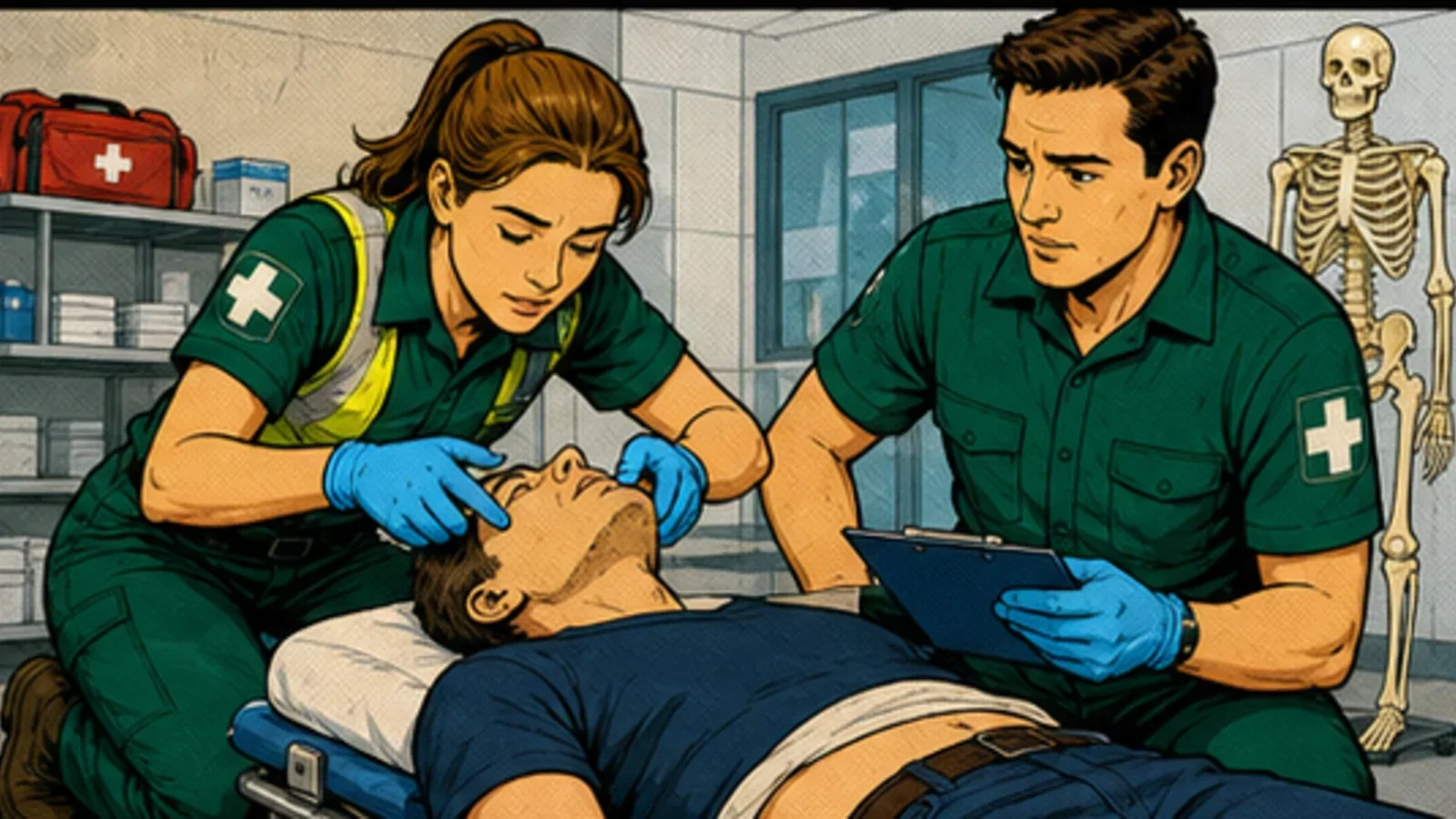
The scene: A trained responder uses a systematic primary survey while preparing a concise escalation handover.
In this ABCDE scene, begin with A for Airway: Is the airway open and protected? That opening prompt matters here because Use ABCDE when you see primary survey language in first aid, emergency care or handover notes. For public first aid action in Australia, DRSABCD remains the simplest emergency starting sequence. Keep the observation tied to primary survey, emergency assessment language, first aid course notes and clinical handover terms; in practice, watch response, airway and whether breathing is normal while emergency help and an AED are organised rather than reciting the letters without checking the person or setting.
For ABCDE, E closes the pattern as Exposure. Look for hidden injury, rash, bleeding, heat, cold or other clues while preserving dignity and warmth. Before the sequence is treated as complete, relate it to when the collapse happened, what breathing looked like, when CPR started and whether an AED analysed or shocked. A specific trap to avoid is: Do not use clinical-sounding labels to work beyond your training.
Where the scenario could change: Do not treat ABCDE as a reason to delay DRSABCD in a collapse. A remembered sequence must never delay CPR, defibrillation or a Triple Zero (000) call. If the facts no longer fit a stable ABCDE example, stop rehearsing the acronym and move to the safer emergency, clinical or workplace pathway.
ABCDE and similar terms
A structured check of airway, breathing, circulation, disability and exposure, used by trained responders and clinicians. It is not a replacement for the DRSABCD sequence taught in basic first aid.
Here is how the related terms differ:
- DRABC: A shorter response sequence you may recognise from older training. For current Australian basic first aid, learn DRSABCD, which explicitly includes sending for help and defibrillation.
- FBAO: A foreign object blocking the airway, commonly called choking. This names the problem; the response depends on the person's condition and age.
- ABC: Airway, breathing and circulation: three key ideas in emergency care. DRSABCD gives beginners the fuller Australian basic first-aid sequence.
- ALS: Advanced life support, provided by appropriately trained health professionals using additional treatments and equipment.
Frequently asked questions
What does ABCDE stand for?
A means Airway; B means Breathing; C means Circulation; D means Disability; E means Exposure. ABCDE is a structured assessment acronym used in emergency care to organise immediate problems by Airway, Breathing, Circulation, Disability and Exposure.
When is ABCDE useful?
Use ABCDE when you see primary survey language in first aid, emergency care or handover notes. For public first aid action in Australia, DRSABCD remains the simplest emergency starting sequence.
Is ABCDE a first aider acronym or a paramedic one?
Both groups may see it, but first aiders should use it as a simple organiser, not as permission to do clinical procedures beyond training. When in doubt, call 000 and follow instructions.
How is ABCDE different from ABC?
ABC focuses on airway, breathing and circulation. ABCDE adds disability (response/neurology) and exposure (hidden problems) to make the scan more complete.
What does “Disability” mean in plain English?
It means how awake and responsive the person is, and whether there are signs suggesting a serious neurological problem (confusion, drowsiness, weakness, seizures).
How is ABCDE different from DRABC?
ABCDE is framed here around primary survey, emergency assessment language, first aid course notes and clinical handover terms. DRABC is framed around older first aid action plans, primary survey language and searches comparing DRABC with DRSABCD. They may appear in the same course or incident, but they answer different questions and should not be treated as interchangeable.
When should I call Triple Zero (000)?
Call Triple Zero (000) when the person is seriously ill or injured, is deteriorating, or the urgent warning signs described on this page are present. A remembered sequence must never delay CPR, defibrillation or a Triple Zero (000) call.
Related Acronyms
- ANZCOR Adult ALS protocol
- Queensland Health Primary Clinical Care Manual
- ANZCOR Basic Life Support
- St John Victoria emergency first aid
This guide is educational and does not replace accredited first aid training, professional medical advice, or directions from emergency services.