
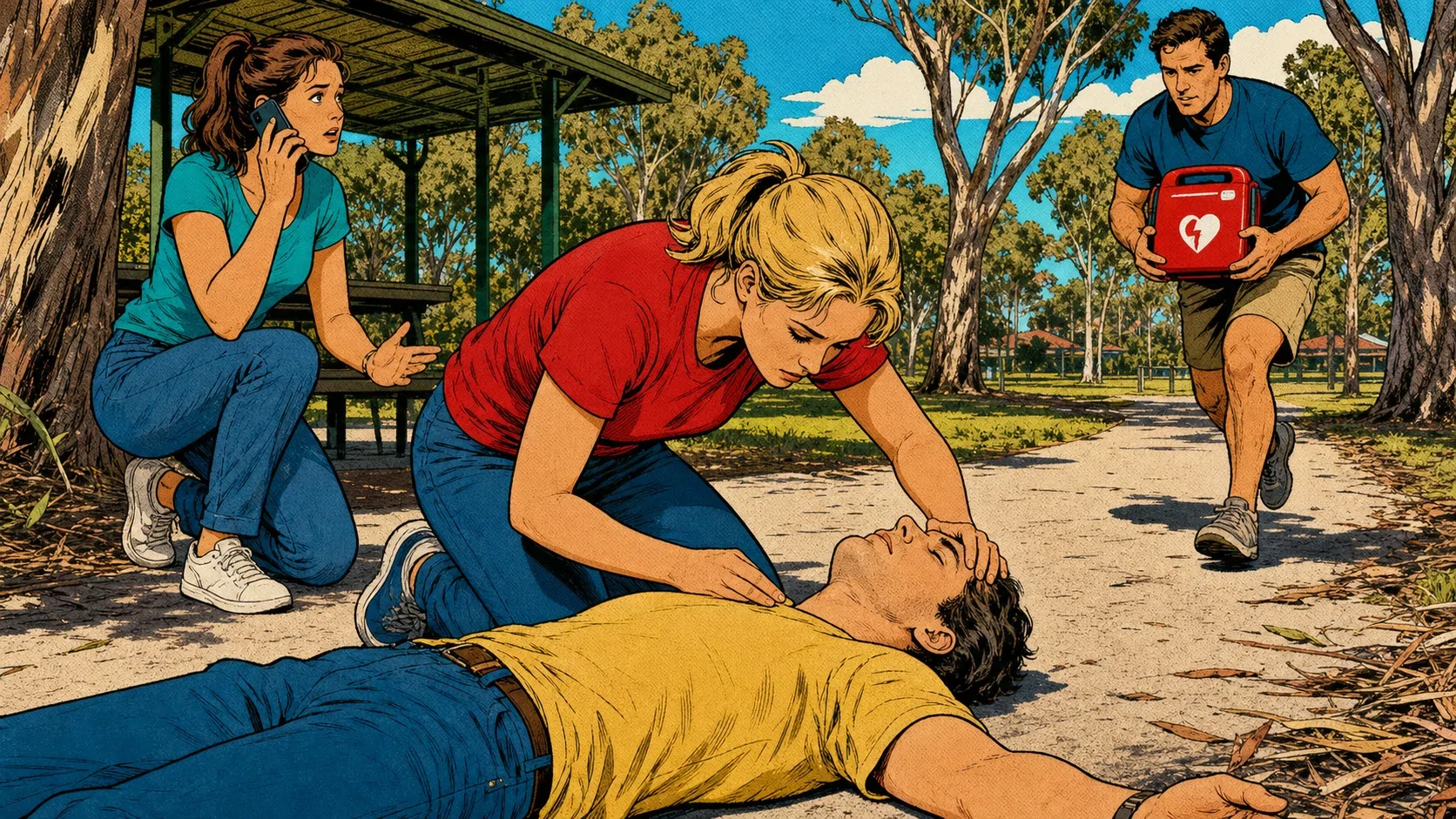

DRABC means Danger, Response, Airway, Breathing and Circulation, an older first aid sequence now usually expanded to DRSABCD in Australia.
Source check: 8 August 2026 · How this page is checked · Report a correction
Quick answer
DRABC: D means Danger; R means Response; A means Airway; B means Breathing; C means Circulation. DRABC means Danger, Response, Airway, Breathing and Circulation, an older first aid sequence now usually expanded to DRSABCD in Australia.
When DRABC helps
Use DRABC mainly when reading older first aid notes or comparing first aid acronyms. In current Australian first aid learning, DRSABCD is the stronger public-facing sequence because it adds Send for help, CPR and Defibrillation clearly.
Safety boundary: A remembered sequence must never delay CPR, defibrillation or a Triple Zero (000) call. If a real incident is unfolding, act on the person’s condition, call Triple Zero (000) when it is an emergency and follow the operator’s instructions.
Where it sits: DRABC is commonly read alongside ABCDE, ABC, COWS, FBAO, but each term has a different job. The comparisons later on this page explain those boundaries.
Framework status: DRABC is older primary-survey wording. It is not the preferred current public action plan in Australia and should not displace Send for help, CPR and Defibrillation in DRSABCD.

What Does DRABC Stand For?
| D | Danger Check the scene for danger before approaching. |
| R | Response Check whether the person responds to voice and touch. |
| A | Airway Open the airway and clear obvious loose material if safe. |
| B | Breathing Check whether the person is breathing normally. |
| C | Circulation Older wording often used to remind rescuers to think about circulation, severe bleeding and CPR needs. |
Common Mistakes
- Do not stop at DRABC if someone is unresponsive and not breathing normally.
- Do not let older wording delay calling 000, starting CPR or using an AED.
- Do not assume Circulation means a first aider should spend time checking a pulse.
DRABC Step-By-Step For Beginners
Use this detailed sequence when learning how DRABC applies to older first aid action plans, primary survey language and searches comparing DRABC with DRSABCD. It connects the letters to observable checks, clear words and a useful handover rather than treating the acronym as a bare list.
- Before: Treat DRABC as older shorthand. DRABC is common in older first aid notes. In Australia, DRSABCD is the clearer modern sequence because it includes Send for help, CPR and Defibrillation explicitly. Use DRABC as a memory bridge, not as a reason to delay action.
- During: Danger + Response. Start the same way you would with DRSABCD: check danger, then check response with voice and gentle touch. If the response is absent or abnormal, move on quickly and get help early.
- During: Send for help early (000 + AED). If the person is unresponsive or not responding normally, call Triple Zero (000) early. Use speakerphone so you can keep going while you listen. If others are present, point to someone specific to call and someone else to bring an AED if available.
- During: Airway + Breathing. Open the airway and check breathing for up to 10 seconds. If they are unresponsive and not breathing normally, call Triple Zero (000) and start CPR. Ask for an AED and use it as soon as it arrives.
- During: Circulation (first aider meaning). In DRABC, “Circulation” is better read as: look for catastrophic bleeding, signs of shock and whether CPR is needed. It does not mean spending time hunting for a pulse if you are not trained.
- After: Convert to DRSABCD language. For handover and practical action, switch to DRSABCD wording: send for help early, keep CPR going if needed, and follow AED/000 instructions. That keeps your response aligned with most Australian training.
A Real-World DRABC Scenario
The scene: Older workplace material uses DRABC and a learner compares it with the current DRSABCD sequence.
In this DRABC scene, begin with D for Danger: Check the scene for danger before approaching. That opening prompt matters here because Use DRABC mainly when reading older first aid notes or comparing first aid acronyms. In current Australian first aid learning, DRSABCD is the stronger public-facing sequence because it adds Send for help, CPR and Defibrillation clearly. Keep the observation tied to older first aid action plans, primary survey language and searches comparing DRABC with DRSABCD; in practice, watch response, airway and whether breathing is normal while emergency help and an AED are organised rather than reciting the letters without checking the person or setting.
For DRABC, C closes the pattern as Circulation. Older wording often used to remind rescuers to think about circulation, severe bleeding and CPR needs. Before the sequence is treated as complete, relate it to when the collapse happened, what breathing looked like, when CPR started and whether an AED analysed or shocked. A specific trap to avoid is: Do not assume Circulation means a first aider should spend time checking a pulse.
Where the scenario could change: Do not stop at DRABC if someone is unresponsive and not breathing normally. A remembered sequence must never delay CPR, defibrillation or a Triple Zero (000) call. If the facts no longer fit a stable DRABC example, stop rehearsing the acronym and move to the safer emergency, clinical or workplace pathway.
DRABC and similar terms
A shorter response sequence you may recognise from older training. For current Australian basic first aid, learn DRSABCD, which explicitly includes sending for help and defibrillation.
Here is how the related terms differ:
- ABCDE: A structured check of airway, breathing, circulation, disability and exposure, used by trained responders and clinicians. It is not a replacement for the DRSABCD sequence taught in basic first aid.
- ABC: Airway, breathing and circulation: three key ideas in emergency care. DRSABCD gives beginners the fuller Australian basic first-aid sequence.
- COWS: A simple prompt for checking whether someone responds. It is only one check, not the whole first-aid response.
- FBAO: A foreign object blocking the airway, commonly called choking. This names the problem; the response depends on the person's condition and age.
Frequently asked questions
What does DRABC stand for?
D means Danger; R means Response; A means Airway; B means Breathing; C means Circulation. DRABC means Danger, Response, Airway, Breathing and Circulation, an older first aid sequence now usually expanded to DRSABCD in Australia.
When is DRABC useful?
Use DRABC mainly when reading older first aid notes or comparing first aid acronyms. In current Australian first aid learning, DRSABCD is the stronger public-facing sequence because it adds Send for help, CPR and Defibrillation clearly.
Did DRSABCD replace DRABC?
In many Australian first aid contexts, yes. DRABC is still seen in older resources, but DRSABCD is more explicit about calling 000, starting CPR and using an AED.
Where does “Send for help” fit if I only remember DRABC?
Put it in early, right after checking danger and response. If you are worried, call 000 sooner rather than later.
If I’m alone, do I call 000 before airway/breathing?
If the person is unresponsive or not breathing normally, call Triple Zero (000) early and use speakerphone so you can start CPR quickly while you listen. Follow the operator’s instructions.
How is DRABC different from ABCDE?
DRABC is framed here around older first aid action plans, primary survey language and searches comparing DRABC with DRSABCD. ABCDE is framed around primary survey, emergency assessment language, first aid course notes and clinical handover terms. They may appear in the same course or incident, but they answer different questions and should not be treated as interchangeable.
When should I call Triple Zero (000)?
Call Triple Zero (000) when the person is seriously ill or injured, is deteriorating, or the urgent warning signs described on this page are present. A remembered sequence must never delay CPR, defibrillation or a Triple Zero (000) call.
Related Acronyms
- Better Health Channel
- ANZCOR unconscious person guideline
- ANZCOR airway guideline
- ANZCOR breathing guideline
- ANZCOR Basic Life Support
- St John primary survey DRABC
This guide is educational and does not replace accredited first aid training, professional medical advice, or directions from emergency services.