
ASCIA is the Australasian Society of Clinical Immunology and Allergy, the name behind the familiar anaphylaxis action plans.
Source check: 8 August 2026 · How this page is checked · Report a correction
Quick answer
ASCIA: A means Australasian; S means Society; C means Clinical; I means Immunology; A means Allergy. ASCIA is the Australasian Society of Clinical Immunology and Allergy, the name behind the familiar anaphylaxis action plans.
When ASCIA helps
Use the person’s current ASCIA Action Plan when they have one. The 2026 plans include a general version and device-specific versions, so follow the instructions for the adrenaline device available rather than assuming every device works the same way. If anaphylaxis is suspected, follow the plan, position the person as directed, give adrenaline without delay and call Triple Zero (000) for an ambulance.
Safety boundary: Follow the person’s current Australian action plan and the actual device instructions; do not wait for certainty when symptoms are severe. If a real incident is unfolding, act on the person’s condition, call Triple Zero (000) when it is an emergency and follow the operator’s instructions.
Where it sits: ASCIA is commonly read alongside EAI, IM, 4x4x4, but each term has a different job. The comparisons later on this page explain those boundaries.
What Does ASCIA Stand For?
| A | Australasian A regional clinical body covering Australia and New Zealand. |
| S | Society A professional society for allergy and clinical immunology. |
| C | Clinical Focused on clinical practice and patient safety. |
| I | Immunology The immune-system specialty behind allergy and anaphylaxis guidance. |
| A | Allergy The condition area most families associate with ASCIA action plans. |
Common Mistakes
- Do not stand or walk a person with suspected anaphylaxis.
- Do not delay adrenaline because you are hoping antihistamines will be enough.
- Do not leave the person alone after giving adrenaline.
ASCIA Step-By-Step For Beginners
Use this detailed sequence when learning how ASCIA applies to anaphylaxis recognition and current ASCIA adrenaline-device action plans. It connects the letters to observable checks, clear words and a useful handover rather than treating the acronym as a bare list.
- Recognise it early. If the person has sudden breathing trouble, swelling, collapse, or severe symptoms after a likely allergen exposure (food, insect sting, medication), treat it as possible anaphylaxis.
- Follow their current ASCIA Action Plan. Follow the plan step by step and use the person’s prescribed adrenaline device as directed. ASCIA’s 2026 plans include a general version plus device-specific versions, so use the instructions that match the device available.
- Call Triple Zero (000) and say anaphylaxis. Call Triple Zero (000) and ask for an ambulance early. Tell the operator it may be anaphylaxis and put the phone on speaker so you can keep helping.
- Lay them flat (do not stand or walk). Keep them lying flat (or seated if they cannot breathe lying down). Do not let them stand or walk, even if they say they feel better.
- No food or drink. Do not give food or drink. Focus on breathing, positioning, and following the plan.
- Be ready to repeat the plan. If symptoms are not improving, follow the timing and repeat-dose steps on the ASCIA Action Plan and the emergency operator’s instructions. If another adrenaline device is available and the plan directs it, it may be needed.
- If they deteriorate: switch to DRSABCD. If the person becomes unresponsive or is not breathing normally, follow DRSABCD priorities: call 000 on speaker, start CPR, and use an AED if available.
A Real-World ASCIA Scenario
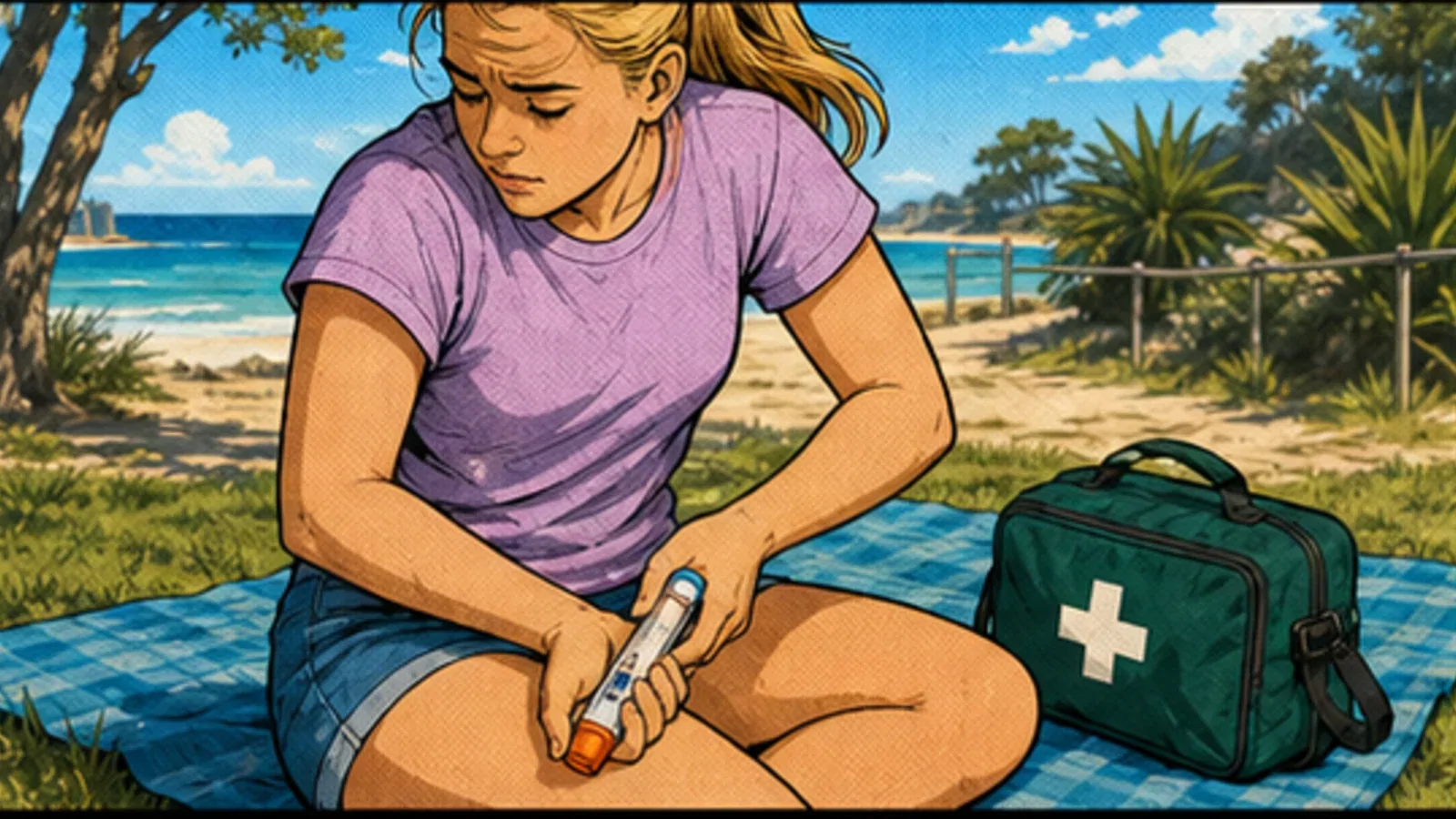
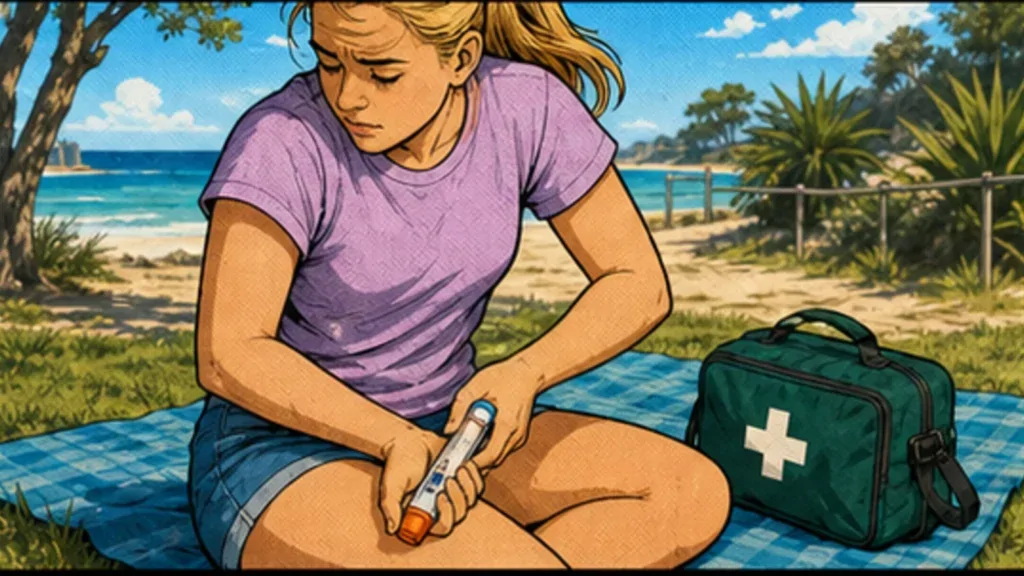
The scene: After eating, a diner develops throat tightness and noisy breathing while their action plan is found.
In this ASCIA scene, begin with A for Australasian: A regional clinical body covering Australia and New Zealand. That opening prompt matters here because Use the person’s current ASCIA Action Plan when they have one. The 2026 plans include a general version and device-specific versions, so follow the instructions for the adrenaline device available rather than assuming every device works the same way. If anaphylaxis is suspected, follow the plan, position the person as directed, give adrenaline without delay and call Triple Zero (000) for an ambulance. Keep the observation tied to anaphylaxis recognition and current ASCIA adrenaline-device action plans; in practice, watch breathing effort, voice, swelling, skin signs, alertness and the person’s current action plan and device rather than reciting the letters without checking the person or setting.
For ASCIA, A closes the pattern as Allergy. The condition area most families associate with ASCIA action plans. Before the sequence is treated as complete, relate it to the trigger if known, signs observed, device or medicine used, time given and response before ambulance arrival. A specific trap to avoid is: Do not leave the person alone after giving adrenaline.
Where the scenario could change: Do not stand or walk a person with suspected anaphylaxis. Follow the person’s current Australian action plan and the actual device instructions; do not wait for certainty when symptoms are severe. If the facts no longer fit a stable ASCIA example, stop rehearsing the acronym and move to the safer emergency, clinical or workplace pathway.
ASCIA and similar terms
The Australasian Society of Clinical Immunology and Allergy, which produces allergy and anaphylaxis action plans. The name points you to a plan, not a sequence of letters to carry out.
Here is how the related terms differ:
- EAI: An adrenaline autoinjector: the device used to give adrenaline for anaphylaxis. Follow the person's action plan and the device instructions.
- IM: Intramuscular, meaning into a muscle. It describes how a medicine is given, not which medicine to choose.
- 4x4x4: A memory aid used in Australian asthma first aid with a blue or grey reliever puffer and spacer. It is an asthma aid, not the anaphylaxis action plan.
Frequently asked questions
What does ASCIA stand for?
A means Australasian; S means Society; C means Clinical; I means Immunology; A means Allergy. ASCIA is the Australasian Society of Clinical Immunology and Allergy, the name behind the familiar anaphylaxis action plans.
When is ASCIA useful?
Use the person’s current ASCIA Action Plan when they have one. The 2026 plans include a general version and device-specific versions, so follow the instructions for the adrenaline device available rather than assuming every device works the same way. If anaphylaxis is suspected, follow the plan, position the person as directed, give adrenaline without delay and call Triple Zero (000) for an ambulance.
Are antihistamines enough?
Antihistamines do not treat life-threatening anaphylaxis. Follow the ASCIA plan, use adrenaline if indicated, and call Triple Zero (000) and ask for an ambulance.
What if I am not sure it is anaphylaxis?
If you are worried or symptoms are severe, treat it seriously and call Triple Zero (000) and ask for an ambulance. It is safer to escalate early.
When would I use another adrenaline device?
Follow the written ASCIA Action Plan and emergency operator directions. The plan includes what to do if symptoms are not improving and another device is available.
How is ASCIA different from EAI?
ASCIA is framed here around anaphylaxis recognition and current ASCIA adrenaline-device action plans. EAI is framed around anaphylaxis action plans, allergy first aid and the difference between an autoinjector and the broader term adrenaline device. They may appear in the same course or incident, but they answer different questions and should not be treated as interchangeable.
When should I call Triple Zero (000)?
Call Triple Zero (000) when the person is seriously ill or injured, is deteriorating, or the urgent warning signs described on this page are present. Follow the person’s current Australian action plan and the actual device instructions; do not wait for certainty when symptoms are severe.
Related Acronyms
- ASCIA 2026 action plans
- ASCIA 2026 anaphylaxis plan update
- ASCIA anaphylaxis first aid
- healthdirect Australia
This guide is educational and does not replace accredited first aid training, professional medical advice, or directions from emergency services.