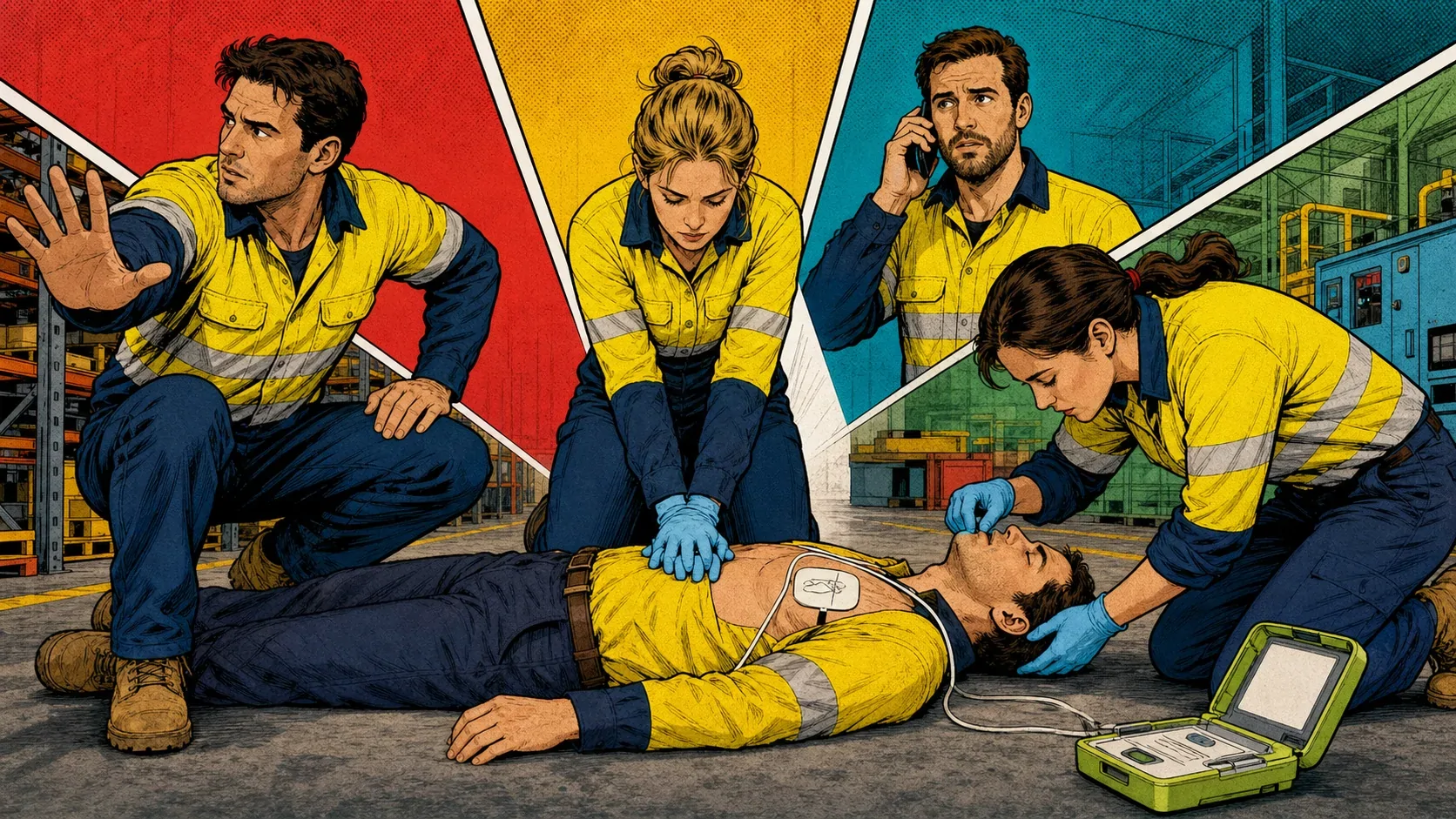

The big emergency sequence: Danger, Response, Send for help, Airway, Breathing, CPR and Defibrillation.
Source check: 8 August 2026 · How this page is checked · Report a correction
Quick answer
DRSABCD: D means Danger; R means Response; S means Send for help; A means Airway; B means Breathing; C means CPR; D means Defibrillation. The big emergency sequence: Danger, Response, Send for help, Airway, Breathing, CPR and Defibrillation.
When DRSABCD helps
Use DRSABCD whenever someone collapses, is unconscious, is not breathing normally, has a life-threatening injury, or the scene feels chaotic and you need a simple order of action.
Safety boundary: A remembered sequence must never delay CPR, defibrillation or a Triple Zero (000) call. If a real incident is unfolding, act on the person’s condition, call Triple Zero (000) when it is an emergency and follow the operator’s instructions.
Where it sits: DRSABCD is commonly read alongside ABCDE, ABC, COWS, DRABC, but each term has a different job. The comparisons later on this page explain those boundaries.
Framework status: Australian action plan; ANZCOR guidance applies.

What Does DRSABCD Stand For?
| D | Danger Check for danger to yourself, bystanders and the person before touching anything. |
| R | Response Ask, touch and speak loudly enough to work out whether the person is responding. |
| S | Send for help Call Triple Zero (000) and ask for an ambulance early (speakerphone if you can). Ask someone nearby to bring an AED if one is available. |
| A | Airway Look in the mouth for obvious obstruction. If safe, remove only loose material you can see (do not blindly sweep with fingers) and open the airway. |
| B | Breathing Look, listen and feel for normal breathing. Gasping is not normal breathing. If they are not breathing normally, move to CPR. |
| C | CPR If unresponsive and not breathing normally, start CPR. Use 30 compressions then 2 breaths if trained and willing, or do compression-only CPR and follow the Triple Zero (000) operator’s instructions. |
| D | Defibrillation Turn on and attach an AED as soon as it arrives and follow the spoken prompts. Keep CPR going when the AED allows. |
Common Mistakes
- Do not rush past Danger. A rescuer who becomes injured cannot help.
- Do not wait to call Triple Zero (000) until you have figured everything out.
- Do not delay CPR while searching for a perfect answer. If the person is unresponsive and not breathing normally, begin.
DRSABCD Step-By-Step For Beginners
Use this detailed sequence when learning how DRSABCD applies to first aid acronym for unconscious, collapsed or seriously unwell people. It connects the letters to observable checks, clear words and a useful handover rather than treating the acronym as a bare list.
- Before: Danger first (D). Scan for hazards before you touch the person: traffic, electricity, water, fire/smoke, chemicals, sharps, aggression and body fluids. Use gloves if available. If the scene is not safe, do not enter—get help and call Triple Zero (000).
- Before: Response check (R). Talk to them and gently squeeze their shoulders. A normal response is purposeful words, eye opening or following a simple instruction. Confusion, extreme drowsiness or not making sense is an abnormal response—treat it seriously and get help early.
- During: Send for help early (S). Call Triple Zero (000) and ask for an ambulance early. Put the phone on speaker so you can keep working while you listen. If others are present, point to someone specific to call Triple Zero (000) and someone else to bring an AED.
- During: Airway basics (A). If they are not responding, open the airway. Only remove obvious loose material you can see; do not put fingers blindly into the mouth. If vomiting occurs, roll them onto their side when safe to help keep the airway clear.
- During: Breathing check (B). Look, listen and feel for normal breathing for up to 10 seconds. Gasping is not normal breathing. If they are not breathing normally, move straight to CPR and AED use.
- During: CPR if needed (C). If unresponsive and not breathing normally, start CPR. Use 30 compressions to 2 breaths if trained and willing, or do compression-only CPR. Keep going and follow the Triple Zero (000) call-taker’s instructions.
- During: Defibrillation ASAP (D). If an AED arrives, turn it on and follow the voice prompts. Attach pads as shown. Make sure nobody is touching the person during rhythm checks or a shock, then return straight to CPR.
- After: Keep reassessing. Once the urgent steps are underway, keep checking response and breathing, manage obvious bleeding, keep the person warm, and prepare a clear handover: what happened, what you found, what you did, and what changed.
A Real-World DRSABCD Scenario
The scene: A shopper collapses near the checkout and does not respond. Check the area is safe. Call Triple Zero (000) and ask someone nearby to bring an AED.
If the person is not breathing normally, start CPR. Follow the call-taker’s and AED’s instructions.
Where the scenario could change: Do not rush past Danger. A rescuer who becomes injured cannot help. A remembered sequence must never delay CPR, defibrillation or a Triple Zero (000) call. If the facts no longer fit a stable DRSABCD example, stop rehearsing the acronym and move to the safer emergency, clinical or workplace pathway.

DRSABCD and similar terms
The overall basic first-aid sequence: check danger and response, send for help, check airway and breathing, then give CPR and use a defibrillator when needed. It helps you decide what comes first.
Here is how the related terms differ:
- ABCDE: A structured check of airway, breathing, circulation, disability and exposure, used by trained responders and clinicians. It is not a replacement for the DRSABCD sequence taught in basic first aid.
- ABC: Airway, breathing and circulation: three key ideas in emergency care. DRSABCD gives beginners the fuller Australian basic first-aid sequence.
- COWS: A simple prompt for checking whether someone responds. It is only one check, not the whole first-aid response.
- DRABC: A shorter response sequence you may recognise from older training. For current Australian basic first aid, learn DRSABCD, which explicitly includes sending for help and defibrillation.
Frequently asked questions
What does DRSABCD stand for?
D means Danger; R means Response; S means Send for help; A means Airway; B means Breathing; C means CPR; D means Defibrillation. The big emergency sequence: Danger, Response, Send for help, Airway, Breathing, CPR and Defibrillation.
When is DRSABCD useful?
Use DRSABCD whenever someone collapses, is unconscious, is not breathing normally, has a life-threatening injury, or the scene feels chaotic and you need a simple order of action.
Do I call Triple Zero (000) or start first?
Call early. If you are alone and the person is unresponsive or not breathing normally, call Triple Zero (000) and use speakerphone so you can start CPR straight away. Follow the operator’s instructions.
What do I say to the operator?
Say what happened, where you are, that the person is unresponsive (and whether they are breathing normally), and that you need an ambulance. The operator will guide the next steps.
What if they are unresponsive but breathing normally?
Call Triple Zero (000) and ask for an ambulance, keep the airway open and keep watching their breathing. If it is safe, place them in the recovery position. Be ready to start CPR if breathing becomes abnormal or stops.
How is DRSABCD different from ABCDE?
DRSABCD is framed here around first aid acronym for unconscious, collapsed or seriously unwell people. ABCDE is framed around primary survey, emergency assessment language, first aid course notes and clinical handover terms. They may appear in the same course or incident, but they answer different questions and should not be treated as interchangeable.
When should I call Triple Zero (000)?
Call Triple Zero (000) when the person is seriously ill or injured, is deteriorating, or the urgent warning signs described on this page are present. A remembered sequence must never delay CPR, defibrillation or a Triple Zero (000) call.
Related Acronyms
- Better Health Channel
- healthdirect Australia
- ANZCOR unconscious person guideline
- ANZCOR airway guideline
- ANZCOR breathing guideline
- ANZCOR bleeding guideline
- ANZCOR CPR guideline
- ANZCOR AED guideline
This guide is educational and does not replace accredited first aid training, professional medical advice, or directions from emergency services.