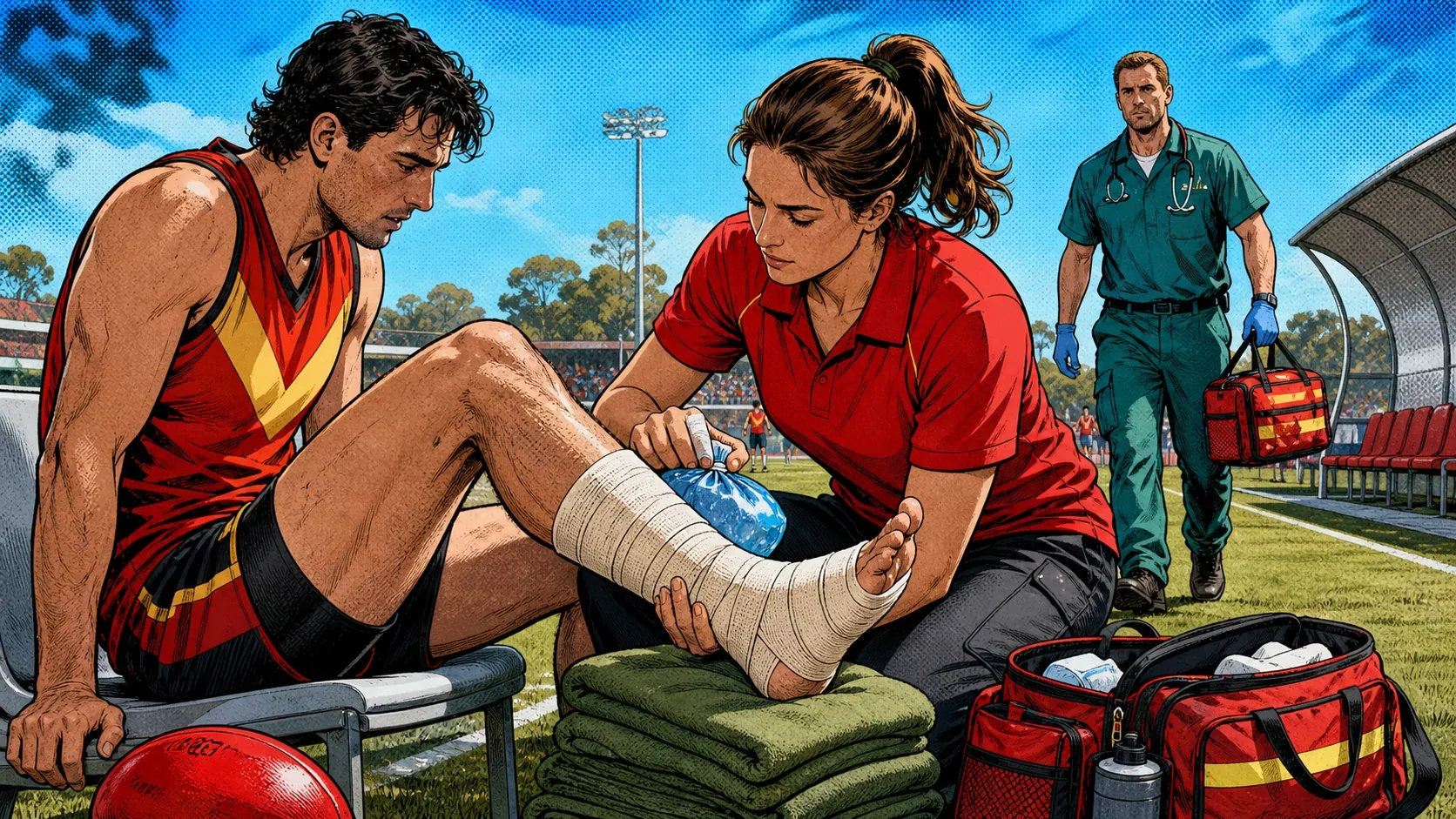

RICER is the classic Australian sports first aid acronym for early soft-tissue injury care.
Source check: 8 August 2026 · How this page is checked · Report a correction
Quick answer
RICER: R means Rest; I means Ice; C means Compression; E means Elevation; R means Referral. RICER is the classic Australian sports first aid acronym for early soft-tissue injury care.
When RICER helps
Use RICER for likely sprains, strains and other soft-tissue injuries after you have ruled out urgent problems. Stop and escalate for medical assessment if there is deformity, severe or worsening pain, numbness/tingling, poor circulation beyond the injury, inability to bear weight, or you suspect fracture, dislocation, concussion, or significant head/neck/back injury. It is not a replacement for DRSABCD in a life-threatening emergency.
Safety boundary: An injury acronym comes after danger and life threats; suspected fracture, dislocation, head injury or severe bleeding needs escalation. If a real incident is unfolding, act on the person’s condition, call Triple Zero (000) when it is an emergency and follow the operator’s instructions.
Where it sits: RICER is commonly read alongside PRICE, PEACE & LOVE, POLICE, RICE, but each term has a different job. The comparisons later on this page explain those boundaries.
Framework status: Australian sports guidance, not diagnosis or return-to-play clearance.
What Does RICER Stand For?
| R | Rest Stop the activity and protect the injured area from further stress. |
| I | Ice Use a cold pack wrapped in cloth for short periods to help pain and swelling. |
| C | Compression Apply a firm elastic bandage if appropriate and watch circulation. |
| E | Elevation Raise the injured part when practical. |
| R | Referral Get medical or physiotherapy advice for severe, unusual or persistent pain, swelling or loss of function. |
Common Mistakes
- Do not use ice directly on bare skin.
- Do not compress so tightly that fingers or toes become cold, blue, numb or more painful.
- Do not treat suspected fracture, dislocation, concussion, head/neck/back injury, or severe pain as a simple sprain.
RICER Step-By-Step For Beginners
Use this detailed sequence when learning how RICER applies to sprains, strains and soft tissue injuries. It connects the letters to observable checks, clear words and a useful handover rather than treating the acronym as a bare list.
- Before: Decide if this is beyond RICER. RICER is for likely soft-tissue injuries (sprains/strains) once serious injury has been ruled out. Stop and escalate if there is deformity, severe or worsening pain, a limb that looks out of place, numbness/tingling, poor circulation beyond the injury (cold, pale or blue fingers/toes), inability to bear weight, uncontrolled bleeding, or any head/neck/back injury concern. If the injury happened with a big force (high-speed collision, bad fall) or the person looks generally unwell, choose assessment early. If you think an ambulance is needed, call Triple Zero (000).
- R – Rest. Stop the activity and protect the area from further stress. Typical use cases are a rolled ankle, knee twist, calf/hamstring strain, or a corked thigh where the person is otherwise well and no red flags are present. If in doubt, sit them out and reassess rather than pushing through.
- I – Ice. If cold helps pain, use a cold pack with a cloth barrier for short periods. Stop if it increases pain, and never place ice directly on skin.
- C – Compression. Use a firm elastic bandage if appropriate, but keep checking circulation beyond the injury (warmth, colour, sensation and movement). Loosen if fingers/toes become numb, cold, blue or more painful.
- E – Elevation. Elevate the limb when practical to reduce throbbing and swelling.
- R – Referral. Referral is the safety valve: arrange assessment if the injury looks significant, pain or swelling is worsening, function is limited, the person cannot use the limb normally, or you are unsure what the injury is. If symptoms are not clearly improving over the next 24 to 48 hours, choose assessment rather than waiting. ‘Referral’ can mean GP, urgent care, emergency department, physiotherapist or sports doctor depending on severity and access.
A Real-World RICER Scenario
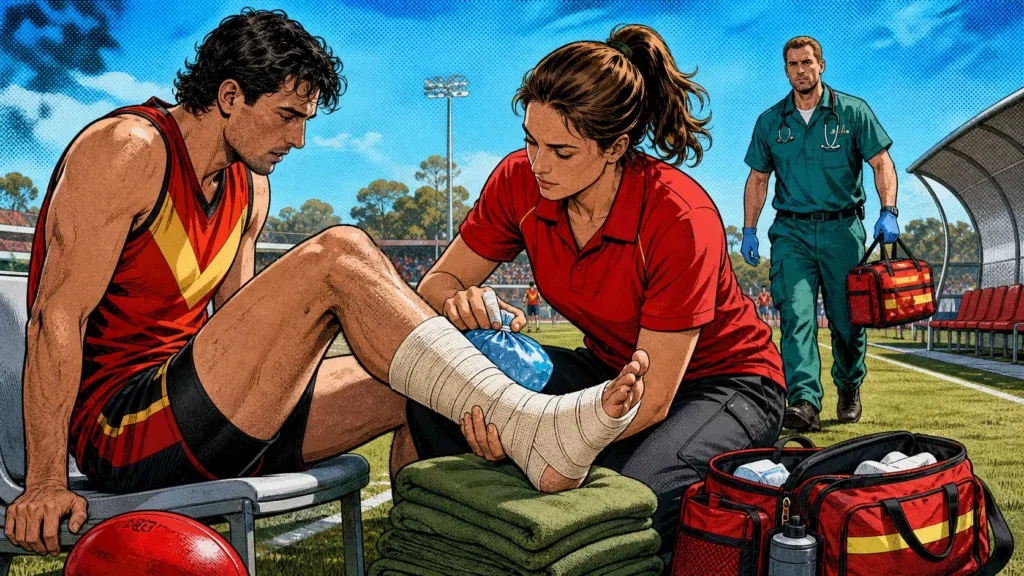
The scene: A netball player rolls an ankle and develops pain and swelling. Stop play and protect the area.
Check the red flags above. If you suspect a fracture or dislocation, or the pain is severe or worsening, seek medical assessment. RICER does not diagnose the injury.
Where the scenario could change: Do not use ice directly on bare skin. An injury acronym comes after danger and life threats; suspected fracture, dislocation, head injury or severe bleeding needs escalation. If the facts no longer fit a stable RICER example, stop rehearsing the acronym and move to the safer emergency, clinical or workplace pathway.
RICER and similar terms
Rest, ice, compression, elevation and referral: a familiar injury-care memory aid. Its final letter reminds you to arrange assessment when needed.
Here is how the related terms differ:
- PRICE: An injury-care memory aid for protection, rest, ice, compression and elevation. It concerns soft-tissue injuries, after urgent problems have been ruled out.
- PEACE & LOVE: A way of talking about early soft-tissue injury care and later recovery. The later exercise steps belong in a recovery plan, with professional advice where needed.
- POLICE: An injury-care memory aid that includes protecting the injury and gradually using it as appropriate. It is often discussed in rehabilitation, rather than as an emergency response.
- RICE: Rest, ice, compression and elevation: a familiar soft-tissue injury memory aid. RICER adds referral for assessment.
Frequently asked questions
What does RICER stand for?
R means Rest; I means Ice; C means Compression; E means Elevation; R means Referral. RICER is the classic Australian sports first aid acronym for early soft-tissue injury care.
When is RICER useful?
Use RICER for likely sprains, strains and other soft-tissue injuries after you have ruled out urgent problems. Stop and escalate for medical assessment if there is deformity, severe or worsening pain, numbness/tingling, poor circulation beyond the injury, inability to bear weight, or you suspect fracture, dislocation, concussion, or significant head/neck/back injury. It is not a replacement for DRSABCD in a life-threatening emergency.
Is RICER for every sports injury?
No. It fits many soft-tissue injuries, but it is the wrong tool for collapse, severe bleeding, suspected fracture/dislocation, or head/neck/back injury concerns.
When should I stop and call for help?
Escalate early if there is severe pain, deformity, worsening swelling, numbness/tingling, poor circulation, inability to bear weight, or any concussion/head injury concern. In Australia, call Triple Zero (000) if you think an ambulance is needed or the person cannot be transported safely.
How tight should compression be?
Firm enough to support, but never so tight that circulation or sensation is affected. Re-check fingers/toes often.
How is RICER different from PRICE?
RICER is framed here around sprains, strains and soft tissue injuries. PRICE is framed around sprains, strains, soft tissue injury care, sports first aid and RICE versus RICER comparisons. They may appear in the same course or incident, but they answer different questions and should not be treated as interchangeable.
When should I call Triple Zero (000)?
Call Triple Zero (000) when the person is seriously ill or injured, is deteriorating, or the urgent warning signs described on this page are present. An injury acronym comes after danger and life threats; suspected fracture, dislocation, head injury or severe bleeding needs escalation.
Related Acronyms
- Sports Medicine Australia soft tissue injuries
- Sports Medicine Australia RICER and NO HARM guide
- healthdirect sprains and strains
This guide is educational and does not replace accredited first aid training, professional medical advice, or directions from emergency services.